
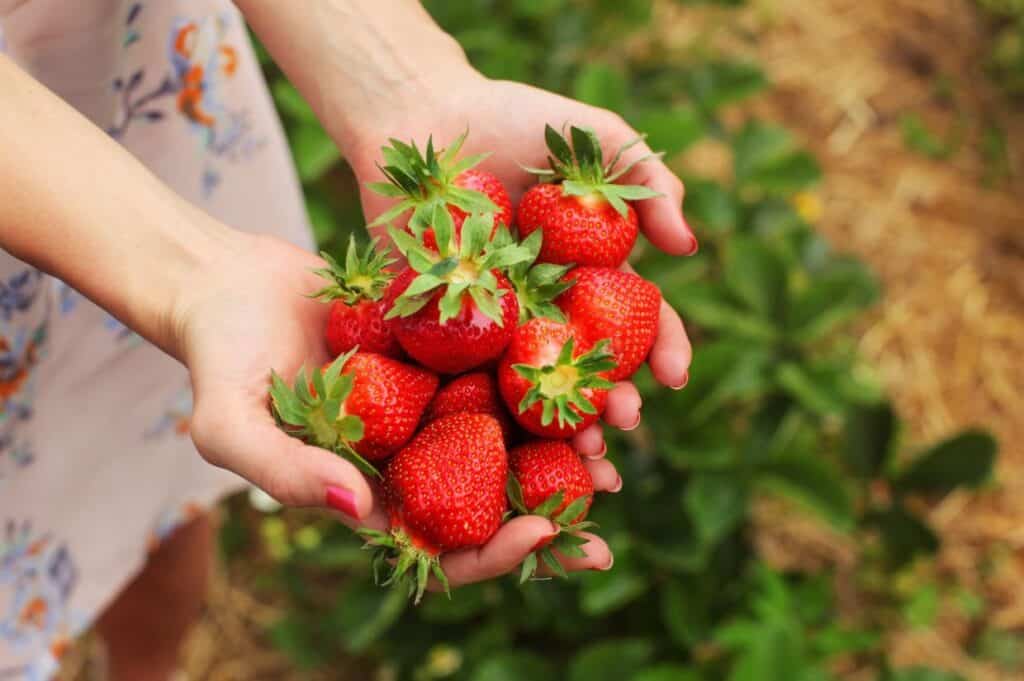
Strawberries arrive at peak season, filling dessert trays and savory plates at the same time. With supply running high, Americans put strawberries to work across the menu, finding more ways to use them and get more inventive in the kitchen.
This post may contain affiliate link(s). As an Amazon Associate, I earn from qualifying purchases. See Disclosures.
Generating about $3.5 billion to $4 billion each year, strawberries are one of the most valuable fruit crops in the United States. Their volume supports use across multiple formats, from batch-prepped dessert bases and protein pairings in full meals to visually driven drinks that keep the fruit in rotation throughout the season.
Freshness guides strawberry use in kitchens
Strawberry season brings a sharp increase in supply, with U.S. farms harvesting about 61,200 acres in 2024 and producing roughly 3.2 billion pounds. Because strawberries stop developing sweetness after harvest, timing plays a direct role in flavor. Fruit picked at peak carries higher natural sugars and a fuller aroma than fruit harvested early, making it suitable for a wide range of dishes.
Short shelf life influences how the fruit is handled, as berries typically last three to seven days under refrigeration, encouraging quick use after purchase. Local sourcing helps preserve quality by reducing transport time and limiting handling.
At the market, selection depends on visible cues, with firm, deep red berries showing readiness, while softer fruit breaks down more quickly. These indicators help determine how the fruit will perform once brought into the kitchen.
Peak season strawberry desserts arrive
Strawberry shortcake remains a defining dessert, built with fresh fruit, cream and a soft base such as biscuit or cake. Light preparation allows the berries to release juices that form a natural syrup, reducing the need for added sugar. The base varies depending on preference, with biscuit, sponge cake or pound cake used to support the fruit and cream.
Other seasonal desserts also return, including pies, tarts and crisps that rely on fresh berries for structure and flavor. Rhubarb and strawberry crumble appears alongside these options, combining tart and sweet elements under a crisp topping. To extend use beyond peak ripeness, cooks often turn excess fruit into jams, preserves and compotes for longer storage.
Strawberries expand into savory cooking
In savory dishes, cooks often add strawberries to salads with greens, cheese and vinaigrettes, where their sweetness offsets sharper and richer elements. This combination works easily in everyday meals and requires minimal adjustment to existing formats.
“Adding fresh strawberries to salads is an easy way to balance flavors, bringing in natural sweetness that complements savory ingredients, making your salads feel fresh and new without a lot of extra work,” said Laura Sampson of Downsizing Dinner. Dishes such as strawberry chicken salad pair the fruit with protein, placing it within a full meal rather than as a side component.
Other uses include fresh salsas with herbs, onions and citrus, along with blended sauces for pork and roasted meats. These options support a broader range of dishes without requiring major changes in preparation.
Fresh berry drinks expand menus
Strawberries are a regular part of seasonal drink menus, adding color and natural sweetness across a range of options. Many use them in lemonades, iced teas and infused water, where the fruit pairs easily with lighter flavors, keeping beverages simple while aligning with warm-weather demand.
Bartenders incorporate strawberries into margaritas and spritz-style drinks, while smoothie shops use them for both flavor and visual appeal. Purees and syrups provide a base that can be applied across multiple drinks, supporting steady output throughout the day.
Coffee shops expand their offerings with strawberry-based cold drinks and add-ins. Strawberry matcha stands out in this category, pairing fruit puree with green tea to create a layered pink and green presentation that draws attention in-store and online.
In-season produce drives menu ideas
Strawberry season encourages more intentional handling of fresh produce, along with more inventive thinking in the kitchen. That approach can open the door for other in-season ingredients to take on a larger role, eventually forming entire spreads built around what is available at that moment. Looking ahead, menus may feature more dishes that include lesser-used produce in main courses, sauces and drinks instead of staying in familiar categories.
Jennifer Allen is a retired professional chef and long-time writer. Her work appears in dozens of publications, including MSN, Yahoo, The Washington Post and The Seattle Times. These days, she’s busy in the kitchen developing recipes and traveling the world, and you can find all her best creations at Cook What You Love.