
This summer, trail meals, picnic spreads and campsite dinners are earning the same pre-trip attention as boots and a map. Hikers are packing calorie-dense snacks and full coolers before they even reach the trailhead, planning dinner with the same care as the route itself. With a little planning, parks with the fewest nearby food options are turning into trips that never need a supply run at all.
This post may contain affiliate link(s). As an Amazon Associate, I earn from qualifying purchases. See Disclosures.
The National Park System includes 433 sites, from national parks to monuments, seashores and historic sites, and many sit far from a grocery store or restaurant, even as visitor traffic holds steady year-round. National Park Week, running Aug. 22 to 30, 2026, puts that reality in front of a wider audience than usual. Remote terrain and stretched supply lines are what make meal planning and preparation necessary in the first place.
Trail meals prioritize energy and portability
The National Park Service recorded more than 323 million recreation visits in 2025, and visitor use data covers 406 of those sites in detail, pointing to steady activity across the system. That volume affects how hikers plan food for time on the trail, favoring meals that support movement and quick consumption to keep energy up without slowing down.
Hikers on strenuous routes can burn up to 4,500 calories a day, so they rely on dense options that provide steady fuel. Nut butter packets, jerky, hard cheeses and energy bars stay common since they hold up without refrigeration and are easy to carry.
Low-moisture items help limit spoilage during hours in the open, while compact, resealable packaging keeps portions manageable and reduces waste. Limited seating and shade also favor foods that can be eaten quickly, and hikers plan hydration alongside meals through regular water intake and electrolyte consumption on longer hikes.
Picnic foods rely on cold storage and timing
Picnic meals often include items that need temperature control, such as sandwiches, salads, fresh fruit and dairy-based foods. These choices require careful handling to maintain quality during time outdoors. Insulated coolers with ice packs help keep food below 40 degrees Fahrenheit, which keeps items safe to eat.
Some park settings support longer, seated meals in designated areas. Tables, shaded spots and waste bins allow for a more relaxed setup, while vehicle access makes it easier to bring full coolers and larger quantities.
Visitors often time meals around the busier midday hours, since that’s when parks tend to see the most foot traffic. Added precautions in some parks require secure storage, such as bear-resistant containers. Cleanup rules apply too, and visitors must remove all waste and packaging to protect shared spaces.
Campsite cooking depends on heat sources and rules
Campsite meals rely on controlled heat, usually from camp stoves or designated fire rings. Rules vary by location and season, with some parks limiting open flames during dry conditions. These limits affect what campers can cook and how they prepare meals, so planning ahead is essential.
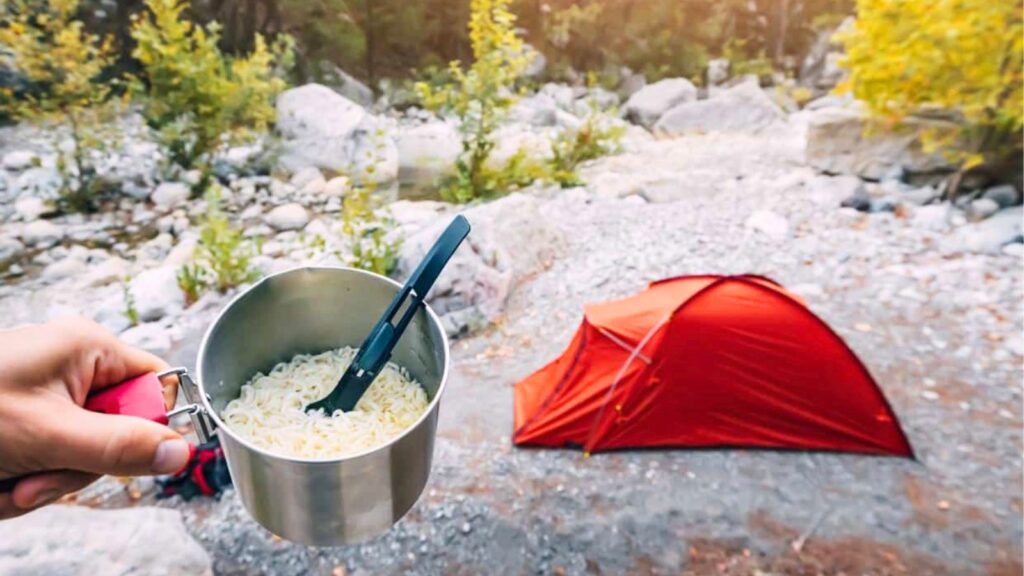
Propane or butane stoves provide steady heat, though fuel limits can affect how long meals can cook. One-pot dishes stay a practical option since they use less water and make cleanup easier. Meals such as pasta, rice-based dishes and soups also fit well in this setup.
Overnight stays give campers room for more involved cooking than day-use visits do. Campers can prepare hot meals and include cooked proteins when time and conditions allow. Food safety rules still apply outdoors, and meat and poultry need to hit proper cooking temperatures.
Pre-trip prep determines food success
Preparation starts before arrival, as hikers portion and pack meals in advance to reduce handling outdoors. Campers often cook or partially prepare ingredients ahead of time to limit work at camp and keep other tasks manageable once the trip is underway.
Packing strategy supports safety and access by placing frozen items at the base of coolers to keep temperatures lower for longer. Campers group dry goods by meal so they can retrieve items without repeated unpacking.
In addition to packing, visitors also review allowed cooking methods and storage requirements in advance, while grocery lists account for limited access to stores near remote areas. Storage containers, utensils and cleaning supplies complete the setup and support both cooking and cleanup from start to finish.
Prepared travelers drive changes beyond parks
A steady flow of prepared visitors carries beyond the entrance gate, as stores along access roads and nearby towns adjust their shelves to match what travelers need on the go. Consistent feedback from repeat visitors can also lead to changes in park policies related to food access and on-site use over time.
Jennifer Allen is a retired professional chef and long-time writer. Her work appears in dozens of publications, including MSN, Yahoo, The Washington Post and The Seattle Times. These days, she’s busy in the kitchen developing recipes and traveling the world, and you can find all her best creations at Cook What You Love.