
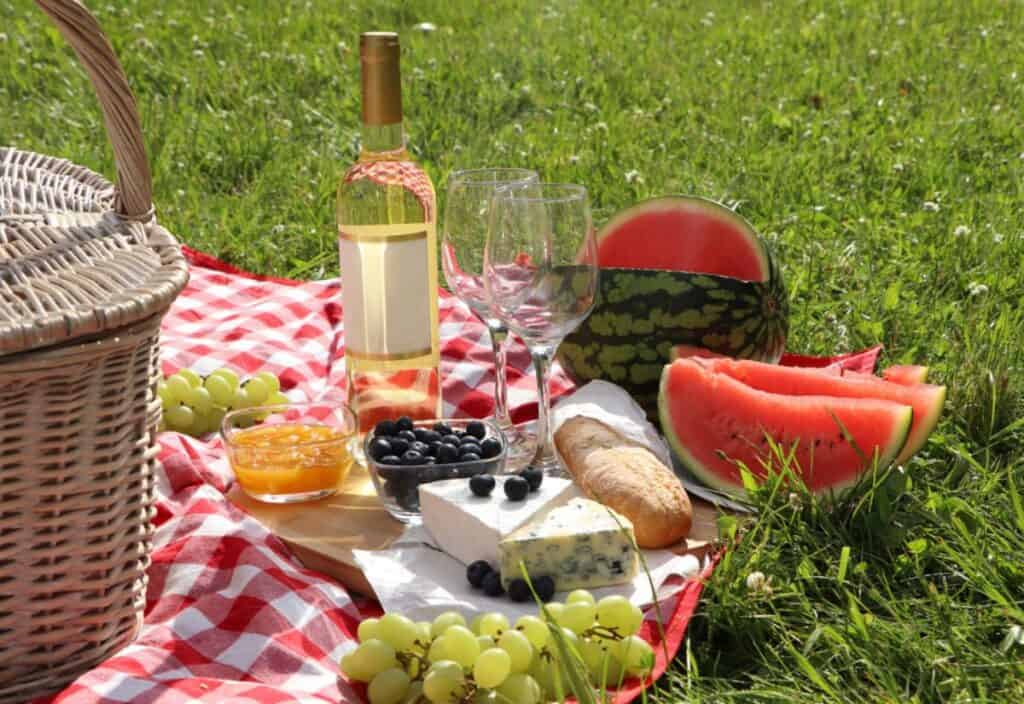
Wine and cheese spreads receive a practical update as more people build picnic setups that travel well, withstand heat and remain safe to eat outdoors. That focus on portability is changing what Americans pack, favoring combinations that can handle the trip without falling apart before the first bite.
This post may contain affiliate link(s). As an Amazon Associate, I earn from qualifying purchases. See Disclosures.
Picnic planning leans into simplicity, with stable pairings, compact portions and wine formats that skip the need for extra tools or setup. The selection relies on items that keep their texture and flavor without constant attention, so nothing needs rescuing halfway through.
Reliable cheeses for outdoor serving
Cheese choice sets the foundation for a picnic that holds up from packing to serving. Instead of relying on soft varieties that break down quickly, outdoor spreads benefit from options that stay intact even after time out of refrigeration. This keeps the presentation clean and portions easy to manage once set out.
Cheddar and Gouda remain reliable picks because they cut cleanly and maintain their structure in changing conditions. Semi-hard cheeses also release less moisture, which helps prevent surfaces from becoming slick or difficult to handle, making them easier to serve without constant adjustment.
Preparation adds another layer of control by cutting portions in advance to reduce repeated contact once the food is exposed. Rinds or wax coatings also help protect the cheese during travel, keeping edges from drying out or softening too quickly.
Portable wine options that pack well
Outdoor settings call for wine choices that stay practical from start to finish. Bottles with screw caps remove the need for openers, simplifying setup and avoiding unnecessary tools. Options such as Kim Crawford Sauvignon Blanc or Yellow Tail Shiraz use screw caps, which make them easy to open and reseal when space is limited.
Lighter styles tend to perform better outside because they remain pleasant across a wider temperature range. Wines such as sauvignon blanc, pinot grigio and rosé hold their flavor even as they warm slightly, while options like Whispering Angel rosé or La Marca Prosecco remain popular for outdoor settings. They do not rely on strict chilling to taste right, which makes them easier to enjoy over the course of a picnic.
Format also matters, as smaller bottles help control portions and reduce leftover wine that may not store well outdoors. Canned and boxed options, such as Underwood Rosé Can or Bota Box Sauvignon Blanc, lower the risk of breakage and fit more easily into bags or compact coolers, making them practical for travel.
Travel-friendly wine and cheese pairings
Well-planned pairings focus on balance and simplicity rather than last-minute assembly. Foods that can be plated quickly and eaten without extra tools make the setup more manageable once the picnic begins, keeping the experience relaxed instead of turning it into a prep session on-site.
Combinations that limit excess moisture also help keep everything clean and easy to handle. Aged cheddar with apple slices works well because the fruit adds freshness without creating a mess. Gouda with almonds offers a similar advantage, with both items easy to portion and serve.
Other pairings rely on dry or preserved elements, such as Manchego with Marcona almonds or Parmesan with dried apricots, which stay stable and require little handling. These choices reduce the need for cutting or adjusting once the food is laid out. Comté with dried figs and sparkling wine keeps portions easy to serve, while pecorino with walnuts and Chianti and aged Asiago with olives and rosé travel well and need minimal prep.
Smart packing keeps food secure
Packing determines how well everything arrives and how easy it is to set up on-site. Containers that close securely help prevent leaks and keep items protected during the trip, reducing cleanup and keeping food from shifting inside bags.
Temperature control remains essential for perishable items, with cold packs placed alongside them to keep everything within a safe range during travel. Grouping chilled items also improves insulation and limits exposure to warmer air.
Planning portions ahead of time removes the need for extra handling later. Premeasured servings help avoid leftovers that may not hold safely outdoors, while keeping dry items separate from those with moisture helps preserve texture until everything is ready to eat.
Arrangement inside the carrier also makes a difference, as packing items snugly helps maintain their condition on arrival. Bringing waste bags or containers supports quick cleanup, keeping the area organized once the picnic wraps up.
Mobility influences food trends
Wine and cheese picnics point to a growing preference for meals that move beyond fixed settings and fit into changing plans. That demand is already reaching store shelves, where prepacked boards and travel-ready pairings make it easier to take these setups anywhere without added effort. As convenience and portability guide more decisions, food designed for mobility is likely to remain popular beyond the picnic setting.
Mandy Applegate is the creator behind Splash of Taste and seven other high-profile food and travel blogs. She’s also the co-founder of Food Drink Life Inc., a unique and highly rewarding collaborative blogger project. Her articles appear frequently on major online news sites, and she always has her eyes open to spot the next big trend.