
Long before a museum visit begins for World Art Day on April 15, art is already part of the walk in some U.S. cities. A mural at the end of a block, a sculpture along a path or an installation built into a downtown route can come into view before anyone reaches a museum door. In these cities, art appears in ordinary public spaces instead of staying inside ticketed institutions.
This post may contain affiliate links that may earn us a commission. For more information, see our Disclosures.
The United States led the global art market in 2025, accounting for about 44% of sales by value. Art across the country also meets people outside galleries and private collections. Along sidewalks, plazas, parks and transit routes in some cities, public artworks become part of the everyday scene.
Art starts on the sidewalk
The Art Basel and UBS Global Art Market Report 2026 states that U.S. art sales reached $26 billion in 2025, up 5% from the previous year. Art remains a major national category, and public art offers one clear way to see that presence beyond the market itself. Across the country, public art appears in everyday spaces, and most encounters happen on the street instead of inside an admission-based venue.
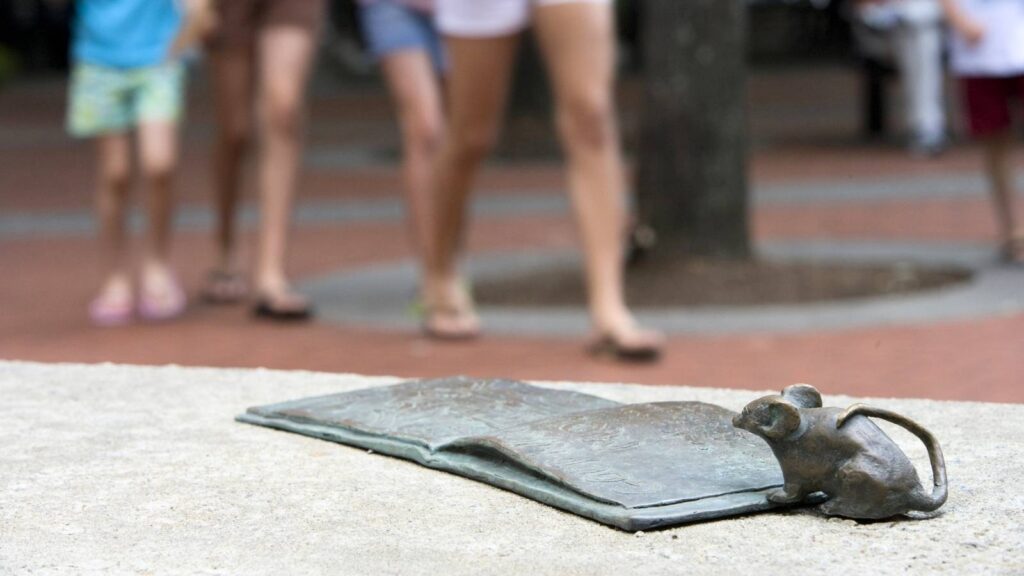
In Greenville, S.C., art installations, like the popular Mice on Main art project, appear throughout the walkable downtown and other public spaces, and more than 160 pieces of original art line the city’s streets and parks. As a result, outdoor art becomes part of everyday walks, making tourist visits worthwhile.
In Salt Lake City, Utah, the official public art program says the city has more than 150 permanent artworks across civic spaces and facilities in all seven city council districts. The collection has grown through its Percent for Art ordinance, which funds site-specific work in the places residents already use.
The public art collection in San Jose, Calif., extends across libraries, parks, community centers, fire stations and other civic sites, placing art well beyond one downtown visitor area. The city’s GIS map gives users several ways to explore that large and varied collection, making it easier to see how widely it is distributed across everyday spaces.
Murals give walls a public role
Murals turn exterior walls into public art on buildings that people already pass. They become part of neighborhood streets, downtown blocks and other public spaces.
Mural Arts Philadelphia says it has created nearly 4,000 works of public art citywide. These works appear in neighborhood streets and commercial corridors, giving many areas a distinct visual identity. People come across them as they move through the city rather than during a separate cultural stop.
Across downtown and nearby districts in St. Petersburg, Fla., more than 600 murals line the streets block by block. They appear along walking routes and public-facing walls, so the city’s outdoor experience carries more visual detail from one part of the downtown to the next. The city’s mural program also draws artists from around the world to create large public works that people can see in the course of an ordinary day.
Murals also appear across neighborhood corridors in Cincinnati, Ohio. More than 300 murals across the city add another visible element to the street beyond storefronts and civic buildings, making walls part of the city’s regular outdoor environment.
Sculpture stays in parks and plazas
Sculpture brings public art off the wall and into shared civic spaces. In many cities, large outdoor works stand in parks, plazas and downtown gathering areas, where people pass them during an ordinary walk.
In Chicago, Ill., sculpture is part of a public art collection that includes nearly 700 works in more than 150 municipal facilities around the city. The collection’s scale spreads art across civic spaces in Chicago instead of limiting it to one cultural stop.
The public art program in Denver, Colo., manages more than 400 pieces throughout the city. Additionally, public art tours move residents and visitors through the collection on foot or by bike, which keeps sculpture tied to public settings rather than one concentrated district.
In Seattle, Wash., the civic art collection includes more than 400 publicly sited and integrated works. The city’s public art appears in parks, libraries, community centers and bridges, placing sculpture within spaces people already use as they move through Seattle.
Public art follows the daily route
Public art takes on a different role when it shows up along everyday routes through a city. In these places, works appear in transit areas, civic buildings, parks and street corridors, so it becomes part of routine movement instead of waiting at one formal art stop.
The public art collection in Austin, Texas, appears in the airport, convention center, police stations and streetscapes. Austin’s collection includes more than 400 artworks, giving the program a wide civic footprint rather than a single concentrated district.
In Minneapolis, the city’s interactive tour points people to more than 300 pieces of public art and provides directions to each one. Minneapolis also says public art is made part of city planning and design, which places the work across regular public routes instead of one destination. Art can come into view during a downtown walk, a park visit or a stop connected to the city’s daily public spaces.
In Charlotte, N.C., Art in Transit has integrated art into 23 completed capital improvement projects since 2002. The program commits 1% of design and construction costs to permanent art in many capital projects, including rail stations, park and rides, bus stops, transportation centers and maintenance facilities. This puts public art into the same infrastructure people use to commute, wait and transfer across the city.
City programs keep the work in view
City ordinances and long-term funding tie public art to infrastructure spending and civic planning, helping keep it visible across cities rather than limited to one-off projects. As a result, public art stays part of the city over time.
In San Antonio, Texas, the Public Art Ordinance, established in 1996, allocates 1% of capital improvement project budgets to public art. The voter-approved 2022-2027 Bond Program raised that share from 1% to 1.5%. San Antonio says the collection now includes more than 800 works across all 10 city council districts.
The public art program in Phoenix was created in 1986 through an ordinance that allocates 1% of the city’s annual Capital Improvement Program to public art projects. The city says that funding comes from infrastructure work tied to places such as streets, parks, airports, libraries and community centers.
In Portland, Ore., city code dedicates up to 2% of qualifying infrastructure projects to public art, contributing to nearly 1,800 pieces of art added to its public art collection over the last 30 years, from downtown city buildings to neighborhood installations.
Art cities earn identity on the street
Public art matters most when it enters the routes people already use, from neighborhood sidewalks to downtown plazas and transit stops. Its effect can last as it gives ordinary spaces a stronger public presence and gives residents something to notice in familiar places. For an art city, the lasting value may rest less in what it owns than in what it places where people can see it every day.
Jennifer Allen is a retired chef turned traveler, cookbook author and nationally syndicated journalist; she’s also a co-founder of Food Drink Life, where she shares expert travel tips, cruise insights and luxury destination guides. A recognized cruise expert with a deep passion for high-end experiences and off-the-beaten-path destinations, Jennifer explores the world with curiosity, depth and a storyteller’s perspective. Her articles are regularly featured on the Associated Press Wire, The Washington Post, Seattle Times, MSN and more.