
World Theatre Day on March 27 brings live performance out of grand venues and into public view, from parks to correctional centers. Productions take over open-air settings, with actors performing directly to audiences instead of waiting behind ticket counters. As participation grows, theater continues to reach new crowds by turning everyday places into active stages.
This post may contain affiliate link(s). As an Amazon Associate, I earn from qualifying purchases. See Disclosures.
Not-for-profit theaters attracted more than 27 million attendees during the 2023 fiscal year, and many companies build wider audiences by staging productions outside formal venues. These performances bring storytelling into everyday settings, where they support education, community programs and outreach efforts, extending theater’s role beyond entertainment.
Public spaces host productions
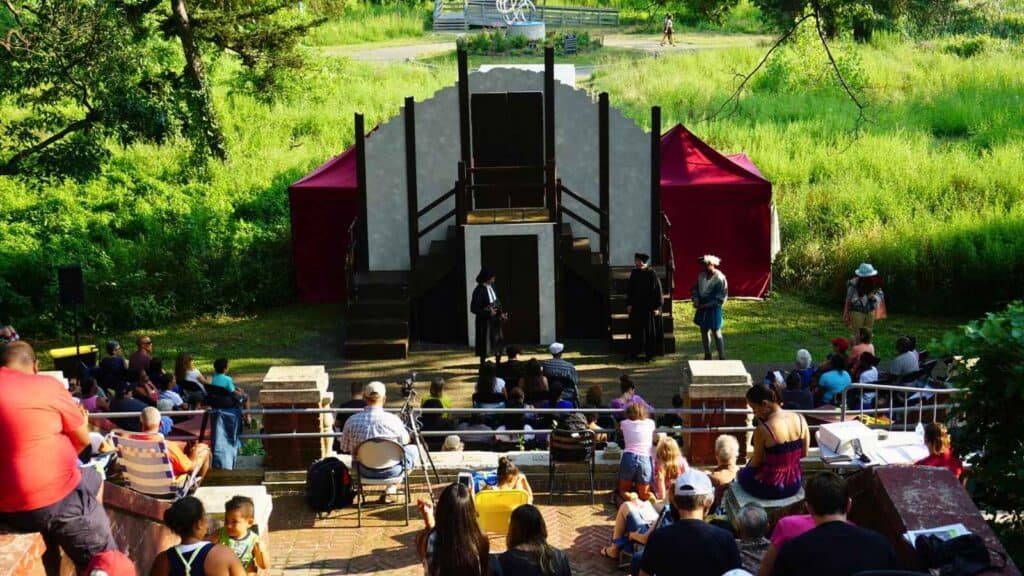
Not-for-profit theaters contributed more than $3.6 billion to the U.S. economy in 2023, with many productions extending beyond traditional venues into parks, plazas and city streets. Seasonal programs often feature well-known plays, including Shakespeare, presented free to the public, and park departments frequently work with local theater groups to stage performances in outdoor settings such as amphitheaters or bandshells.
Open seating creates a relaxed setup, with audiences bringing blankets or chairs and settling across lawns, allowing larger crowds to gather without the limits of indoor venues. Performances in public spaces also draw attention from passersby, who may stop to watch and experience live theater without planning ahead.
Historic sites become stages
Cultural groups expand their performance venues by converting historic locations into active spaces that connect theater with local tourism. Former estates and preserved homes often host small productions in outdoor areas such as gardens or courtyards, where the surroundings become part of the experience rather than just a backdrop.
Ruins of castles and old military forts provide strong visual settings for historical stories, while museums sometimes open galleries or large halls for evening performances that place audiences close to exhibits. These locations allow visitors to engage with history in a format that goes beyond traditional tours.
Cities and preservation groups also adapt older civic and industrial spaces for short-run productions. Former courthouses, rail depots and warehouse buildings can be converted into temporary stages, giving new life to structures no longer part of daily operations. In some destinations, living history sites include brief scripted scenes as part of visitor programs, adding a theatrical layer to educational visits.
Theater enters correctional facilities
Correctional facilities have begun incorporating live theater programs that use performance as part of education and rehabilitation efforts. Initiatives such as Shakespeare in Prison involve incarcerated participants in full productions, and program organizers report lower rates of repeat offenses among those who take part.
Performances typically take place in available spaces such as gymnasiums, chapels or multipurpose rooms. Participants spend weeks learning scripts, practicing scenes and building basic stage skills before presenting their work to small audiences made up of staff and invited guests.
Many of these efforts rely on partnerships with visiting theater groups that work alongside facility education programs. These collaborations bring structured training into the facility while giving participants the opportunity to complete a production from rehearsal through performance.
Hospitals welcome live performances
Healthcare settings may be designed for treatment and recovery, but they also provide space for live performance that reaches patients where they are. Touring actors present brief productions in shared areas such as lobbies or atriums, giving visitors and staff a chance to watch without leaving the building.
Children’s units often include storytelling sessions and puppet shows tailored for younger patients. For those who remain in their rooms, performers bring short scenes directly to the bedside, offering a more personal alternative to larger gatherings.
Many medical centers include these programs as part of broader arts initiatives. Smaller productions run during community events, and partnerships with local theater groups help maintain a steady presence of live performances within the facility.
Touring companies reach rural audiences
Communities without dedicated theaters still have access to live productions through touring groups that bring performances directly to local spaces. These companies travel across smaller towns where permanent venues are limited, setting up temporary stages in places such as school gyms and community centers.
To fit these environments, productions adjust staging, cast size and technical setup. Sets are simplified to match available space, while crews work within tighter timelines for setup and breakdown.
These visits are often short, with performances scheduled for a limited run before moving to the next stop. Even so, they give local audiences a chance to watch professional theater without traveling to larger cities, making live performance more accessible across a wider range of communities.
Broader access defines modern theater
World Theatre Day draws attention to participation in live performances across communities, not only large productions staged in major venues with ticketed audiences. That wider focus encourages collaboration among theaters, public institutions and local governments as groups look for practical ways to organize shows in shared spaces. As these partnerships expand, touring productions and site-specific work give more people a chance to experience live theater.
Mandy writes about food, home and the kind of everyday life that feels anything but ordinary. She has traveled extensively, and those experiences have shaped everything, from comforting meals to small lifestyle upgrades that make a big difference. You’ll find all her favorite recipes over at Hungry Cooks Kitchen.