
The peach craze returns as growers and shoppers focus on what sets a bland fruit apart from a juicy, standout bite. Spotting quality at a glance can mean the difference between a soft disappointment and a standout summer staple. With peach trees requiring stricter growth conditions, getting the best peach now takes more precision than ever.
This post may contain affiliate link(s). As an Amazon Associate, I earn from qualifying purchases. See Disclosures.
Peach growers face more than harvest timing as they navigate bloom cycles, temperature swings and distribution logistics that affect fruit quality. They make decisions in the orchard and packing house that directly shape what ends up on store shelves and in home kitchens.
Peach varieties to know
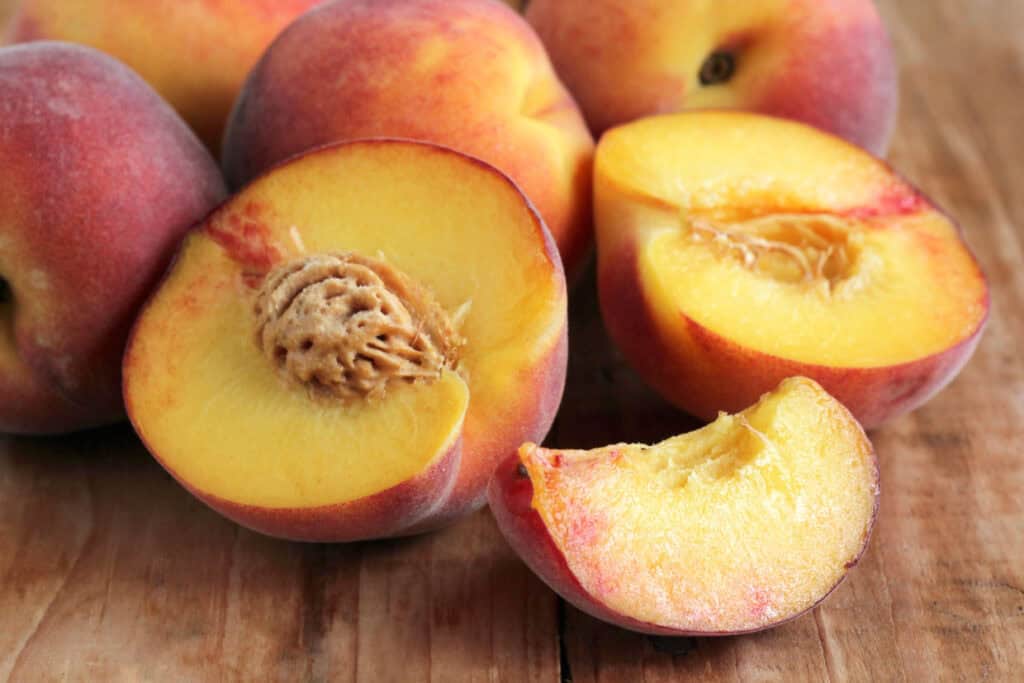
Peach varieties fall into two main categories that shape how people use them: clingstone and freestone. Clingstones have flesh that sticks tightly to the pit, making them harder to separate by hand but ideal for commercial processing. Their soft, juicy flesh tends to be sweeter and more vibrant in color near the stone. This makes them a strong choice for jams, fresh snacking and blended drinks.
Freestones, on the other hand, separate cleanly from the pit, especially when ripe. This makes them easier to handle in home kitchens and ideal for quick slicing or low-prep preserving. Beyond these categories, specialty varieties continue to attract attention. Donut peaches, also called Saturn peaches, are flat, mild and extra sweet, although their higher price and fuzzy skin can be drawbacks. For those who prefer a smooth texture, nectarines offer a fuzz-free option. Genetically, nectarines are peaches with a single mutation and come in both clingstone and freestone types with yellow or white flesh.
Signs of a good peach
A high-quality peach delivers a sharp balance of sweetness and acidity, with freestone types offering both flavor and ease of preparation. Look for firm flesh that pulls cleanly from the pit, a golden-yellow base color that indicates it ripened on the tree, and a distinct cleft that signals full maturity. The fruit should feel mostly firm but give slightly when pressed near the stem.
Other visual cues include smooth, unblemished skin, as cuts or bruises can suggest it was picked too early or handled roughly. When harvesting, a ripe peach should come off the branch with a gentle lift. Shape also matters. Round fruit with a clear definition typically develops well on the tree. Even without touching it, a ripe peach gives off a warm, sweet scent that points to full flavor.
Top zones for peach growing
Peach production thrives in a handful of U.S. states, with California, South Carolina, Georgia and New Jersey leading the way. Climate plays a major role in growing success, and choosing the right variety is key. Peach trees grow best in USDA Zones 6 to 8, but can survive in Zones 4 to 10 with proper care.
Timing and technique also matter. Growers should plant trees while they’re dormant, which is usually in late winter or early spring, depending on local conditions. It’s best to plant them the same day they’re purchased to avoid stressing young roots. Bare-root trees require immediate planting, while potted ones can wait a little longer. Gardeners should look for trees that are about a year old with strong, healthy roots. Older trees often produce less fruit and tend to lose vigor over time.
Orchard work behind great peaches
Careful planning is critical to growing productive peach trees. Before starting an orchard, growers must consider climate, frost risk and required chilling hours. Peach trees need 600 to 900 hours of cold exposure to flower, depending on the variety. Because they bloom early, orchards should not be planted in areas with frost after mid-April. Consistent heat is also necessary for proper fruit ripening.
Peach trees self-pollinate, so growers can plant the same cultivar side by side for easier maintenance and harvesting. One key management step is fruit thinning. Without it, trees produce smaller, lower-quality peaches. Thinning improves fruit size and color while leaving about six inches of space between each peach.
Packing and shelf-life factors
Peaches are delicate and prone to bruising, so careful handling is essential from the orchard to the shelf. Packing must be done with precision to avoid pressure marks or soft spots that shorten freshness. While cold storage can help peaches last longer, extended refrigeration breaks down cell structure and causes a dry, mealy texture.
Some commercial producers use ethylene gas to stimulate ripening after harvest. This process softens fruit quickly, but sometimes at the expense of developing full flavor. Because of this, peaches grown and sold locally often have a stronger taste. They ripen naturally on the tree and avoid the stress of long-distance travel, which helps preserve their texture and aroma.
Peach picking pays off
The peach craze keeps coming back because the fruit delivers when everything falls in place. From variety and growing region to ripeness and handling, each step plays a role in the final result. A well-grown peach picked at the right time offers a flavor that’s rich, balanced and unmistakable. With a bit of knowledge, shoppers can recognize ripeness signals before they ever take a bite. And when they do, a good peach makes its case in one mouthful.
Zuzana Paar is the visionary behind five inspiring websites: Amazing Travel Life, Low Carb No Carb, Best Clean Eating, Tiny Batch Cooking and Sustainable Life Ideas. As a content creator, recipe developer, blogger and photographer, Zuzana shares her diverse skills through breathtaking travel adventures, healthy recipes and eco-friendly living tips. Her work inspires readers to live their best, healthiest and most sustainable lives.