
Walk past a few backyards this spring, and you’ll still see burgers, steaks and chicken on the grill, but they’re showing up in smaller portions and alongside a growing number of plant-forward dishes. It’s not about giving anything up; it’s about how people are building meals now. More variety, more balance and a little less reliance on a single protein to carry the whole plate.
This post may contain affiliate link(s). As an Amazon Associate, I earn from qualifying purchases. See Disclosures.
That change aligns with the rise of flexitarian eating, a pattern where people continue to eat meat but intentionally cut back and add more plant-based foods. Research shows a growing number of consumers are reducing meat consumption without eliminating it, indicating a broader shift toward more plant-forward diets.
Meat is still there, just not running the show
At most cookouts, meat hasn’t disappeared; it just isn’t the star of the show any longer. Instead of a massive steak or a couple of loaded burgers anchoring the plate, you’re more likely to see a mix: maybe one burger, plus a generous spread of grilled vegetables or skewers that combine chicken with peppers and onions, so the meat stretches further. Even burgers themselves are changing, with some cooks mixing in mushrooms or beans to add bulk and flavor.
Higher beef prices are part of the story
There’s also a practical reason behind it. Beef prices have stayed high heading into the 2026 grilling season, and that’s hard to ignore when you’re feeding a group. The American Farm Bureau Federation’s annual cookout report has tracked rising costs for common cookout foods over the past several years, with beef consistently among the most expensive items.
For a broader look at food pricing trends, the U.S. Department of Agriculture continues to track ongoing pressure across grocery categories, including meat. That’s pushed a lot of home cooks to rethink how much they use and how they use it. Instead of centering a meal around large cuts, people are spreading meat across multiple dishes or dialing back portion sizes. It’s less about cutting meat out and more about making it stretch further.
Vegetables get the attention they used to miss
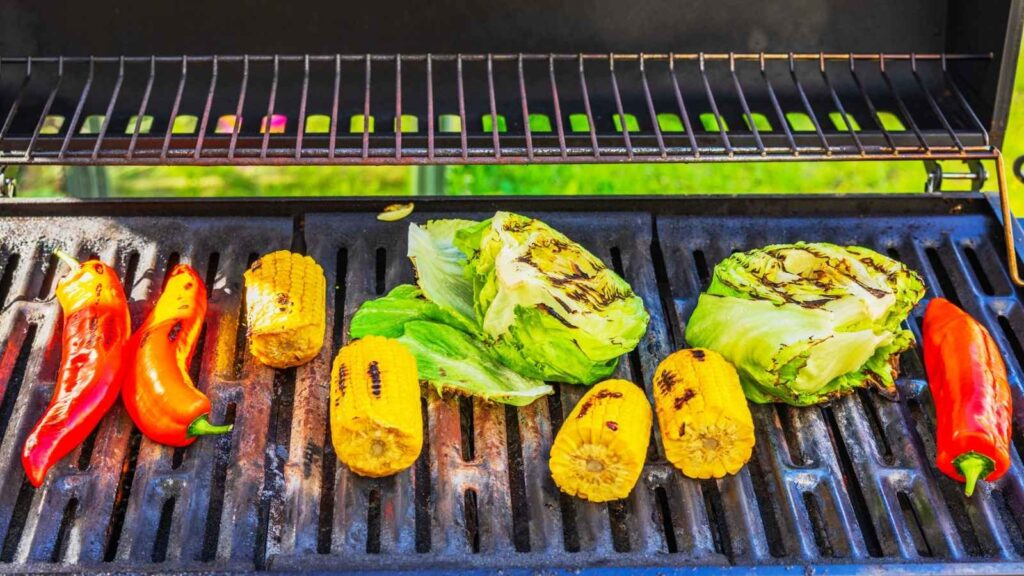
With meat taking up less space, vegetables assume a bigger role, and not as an afterthought. Grilled cabbage wedges, thick slices of cauliflower, trays of zucchini, eggplant and peppers are showing up more often on grills, and they’re being treated like something worth building a meal around. That means real seasoning, marinades and sauces, not just a quick toss on the grill. This lines up with broader menu trends, as plant-forward dishes continue to gain traction beyond vegetarian audiences and move into mainstream eating habits, including at home.
This isn’t about fake burgers
For a while, the conversation around eating less meat was dominated by plant-based substitutes meant to mimic beef, and that’s not really what’s driving things now. Those products are still around, but they’re no longer the main story.
Growth has cooled, and many people are leaning toward simpler, whole ingredients instead. Beans, lentils, grains and vegetables are showing up alongside meat, not trying to replace it. That’s the difference with flexitarian eating: there aren’t strict rules. You’re not committing to anything permanent, just building a plate that feels a little more balanced.
The cookout looks more like a spread now
Another noticeable change is how meals are being served. Instead of one main dish with a couple of sides, the table is filling up with options. Skewers, grilled vegetables, salads and dips all share space, and people build their own plates from there. It’s more casual, more flexible and easier to work around different preferences without making separate meals. This shift also aligns with how people are eating more generally, with smaller portions and a greater variety instead of one heavy dish.
None of this means people are grilling less; if anything, the grill is getting more use because it’s handling more of the meal. What’s changing is how that equipment is being handled. It’s not just for steaks and burgers anymore, but a way to cook everything at once, from vegetables to proteins to sides.
What the cookout says about how people eat
The American cookout still looks familiar, with smoke, a crowd around the grill and something cooking over the flame. But the plate tells a slightly different story. Meat is still part of it, just not the part that defines everything else.
That change isn’t loud, but it’s consistent. It shows up in smaller portions, fuller tables and meals built around more than one idea at a time. And heading into summer 2026, it’s becoming a normal part of how people cook, eat and gather around the grill.
Zuzana Paar is the visionary behind five inspiring websites: Amazing Travel Life, Low Carb No Carb, Best Clean Eating, Tiny Batch Cooking and Sustainable Life Ideas. As a content creator, recipe developer, blogger and photographer, Zuzana shares her diverse skills through breathtaking travel adventures, healthy recipes and eco-friendly living tips. Her work inspires readers to live their best, healthiest and most sustainable lives.