
Mexico has two of the world’s most celebrated food cities, and they offer experiences so different that choosing between them matters more than most travelers expect. Oaxaca and Mexico City each draw a distinct kind of visitor, attract different budgets and deliver entirely different ideas of what a great food trip looks like. The right answer depends entirely on who is asking.
This post may contain affiliate links that may earn us a commission. For more information, see our Disclosures.
Mexico’s food reputation rests on two strengths: a longstanding culinary tradition and a restaurant scene that has earned international recognition. Traditional Mexican cuisine has held UNESCO Intangible Cultural Heritage status since 2010, while the country’s restaurant scene has accumulated formal international recognition in the years since. What that recognition looks like depends on where you go, and nowhere is that clearer than in Oaxaca and Mexico City.
Oaxaca: Markets, moles and mezcal
Travelers come to Oaxaca because the food is inseparable from the place it comes from. Mercado Benito Juárez and Mercado 20 de Noviembre are working markets where tlayudas, Oaxacan cheese, chapulines and the ingredients for mole negro, coloradito and amarillo are bought and sold daily. Cooking classes built around a market visit are common and deliberately unhurried. Mezcal palenques outside the city have welcomed visitors for generations, long before agave spirits became a global category.
Levadura de Olla and Los Danzantes hold Oaxaca’s two Michelin stars in 2026, but fine dining is not the primary reason most travelers make the trip. Oaxaca appeals to visitors who want to understand Mexican food, not simply taste it.
Mexico City: Tasting menus, street stalls and everything in between
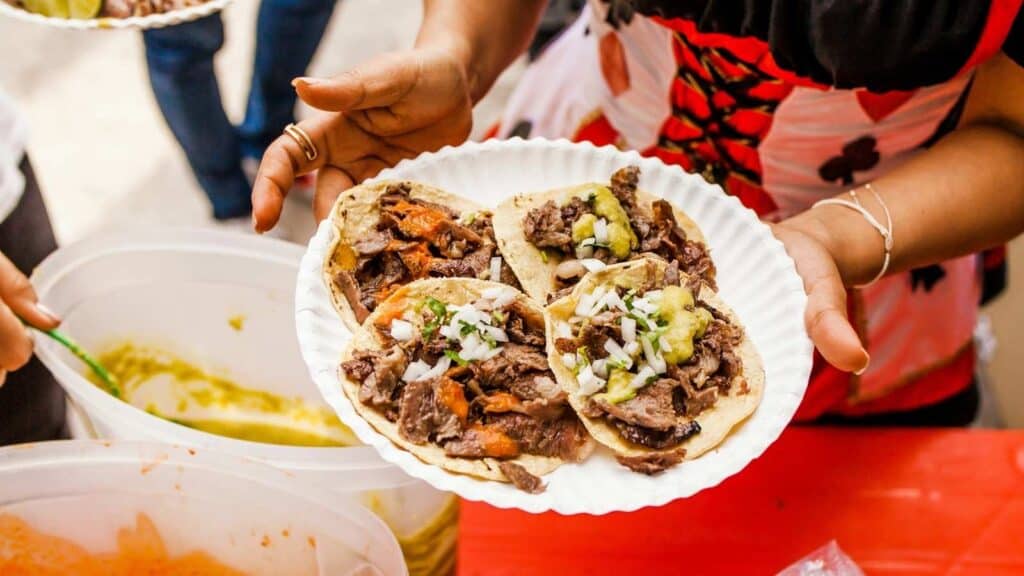
The capital gives food travelers a range that few cities can match. Its Michelin-starred restaurants run from a sidewalk operation with no menu and no sign to two-star tasting menus in Polanco. A morning of tacos de canasta near the Zócalo, a midday stop at a neighborhood market in Roma Norte and a dinner at Pujol can fill a single day without contradiction.
Open since 2000, Pujol holds two Michelin stars and has helped put modern Mexican cuisine into the global conversation for more than two decades. In Roma Norte, Expendio de Maíz earned its star serving corn-based dishes from communal sidewalk tables. Rosetta, set in a historic mansion on Colima, is led by Chef Elena Reygadas and ranked No. 46 on the World’s 50 Best Restaurants list in 2025.
Cost and proximity, side by side
Neither city demands a large budget to eat well, but they behave differently at different price points. In Oaxaca, a tlayuda at Mercado 20 de Noviembre, a mezcal tasting and a market breakfast together cost far less than an equivalent day in most major cities, and mid-range accommodation costs less than comparable rooms in Mexico City’s Roma or Condesa.
In the capital, the spread runs from a tostada at a market stall to a tasting menu at Pujol. Travelers working within a set budget will get more mileage in Oaxaca. Those with flexibility will find more options at every price level in Mexico City.
The two cities are roughly an hour apart by air and about six to seven hours by bus. Four to five days in each gives a complete read on what Mexican food actually is: the indigenous foundations in Oaxaca, the contemporary restaurant scene in the capital. For travelers who cannot choose, a combined trip removes the question entirely.
2 cities, 1 culinary identity
The deeper pattern in food travel right now is that people don’t look for a good meal. They want to know where the food comes from, who makes it and what it means in the place where it exists. That appetite is harder to satisfy than a restaurant reservation, and most destinations can only answer one version of it.
Oaxaca approaches that question through tradition, local knowledge and a strong connection to place, while Mexico City approaches it through scale, variety and the energy of a world-class dining capital. Both are worth the trip. Which one comes first is the only real question.
Jennifer Allen is a retired chef turned traveler, cookbook author and nationally syndicated journalist; she’s also a co-founder of Food Drink Life, where she shares expert travel tips, cruise insights and luxury destination guides. A recognized cruise expert with a deep passion for high-end experiences and off-the-beaten-path destinations, Jennifer explores the world with curiosity, depth and a storyteller’s perspective. Her articles are regularly featured on the Associated Press Wire, The Washington Post, Seattle Times, MSN and more.