
When Bravo’s “Top Chef: Carolinas” wrapped its 14-episode run on June 8, it left behind something no tourism campaign could manufacture: a verified trail of restaurants, pitmasters and chefs that fed some of the most demanding palates on television. Filmed across Charlotte, North Carolina, and Greenville, South Carolina, with a detour through Asheville, the season put two mid-sized Southern cities in front of a national audience week after week. For travelers ready to follow the judges’ path, here is where to eat, what to order and how to do it right.
This post may contain affiliate links that may earn us a commission. For more information, see our Disclosures.
The timing could not be better. In November 2025, the Michelin Guide launched its inaugural American South selection, awarding stars across North and South Carolina for the first time. Charlotte earned its first Michelin star at Counter, and Greenville’s Scoundrel became the first restaurant in the city’s history to receive one. “Top Chef” and Michelin arriving in the same region within months of each other is not a coincidence. It is confirmation of a food scene that has been building for years and is now drawing national attention.
Charlotte: Where the season called home
Charlotte served as “Top Chef’s” base of operations for most of the season, and three of the city’s restaurants became elimination-challenge venues. La Belle Helene, the refined French brasserie in Uptown led by the culinary show’s alum Jamie Lynch, hosted the season’s first elimination challenge, with James Beard Award winner Sean Brock at the judges’ table.
Supperland, Jeff Tonidandel and Jamie Brown’s mid-century church conversion in Plaza Midwood, featured episode three’s elimination challenge. It’s also a Michelin-recommended restaurant. Fine & Fettle in SouthPark, where Chef Greg Collier, a James Beard Award finalist, hosted episode four’s elimination challenge, which tasked contestants with elevating a classic Southern side dish into a main course.
More Charlotte worth exploring
Charlotte’s culinary allure extends well beyond the challenge venues. Midwood Smokehouse brought pitmaster Matthew Barry to the judges’ table during the season’s whole hog episode. Nearby Customshop, a Michelin Recommended neighborhood restaurant in Charlotte’s Elizabeth neighborhood with a wine list that favors old-world bottles, changes its menu two to three times a week.
The Goodyear House, a converted mill home in NoDa, was another stop the judges made during filming. Ever Andalo, a Michelin-recommended Italian-American trattoria on North Davidson, draws weekend brunch crowds with house-made pasta and an all-Italian wine list organized by region. Panko, also in NoDa, brings elevated Peruvian Nikkei cuisine to the neighborhood, with ceviche, lomo saltado and grilled octopus among the standouts.
For a structured introduction to the city’s food culture, the Charlotte Uptown Tasting Tour, run by Taste Carolina, covers the heart of Uptown with stops at some of the city’s best chefs and food artisans.
Greenville: Where the competition headed south
Three episodes of “Top Chef: Carolinas” were filmed in Greenville, and the city delivered at every turn. Soby’s, South Carolina’s first-ever Wine Spectator Grand Award winner and a South Main Street institution, hosted episode nine’s elimination challenge, an eight-course dinner for a room full of the city’s culinary tastemakers, with a Duke’s Mayo Quickfire as the opener.
Abyss brought episode 10’s fishing derby cook-off to its dining room, where the raw bar and blue crab dip draw a steady crowd. Topsoil, in nearby Travelers Rest, served as the setting for episode 11’s elimination challenge, asking contestants to pay tribute to the Swamp Rabbit Trail with elevated rabbit dishes. Swamp Rabbit Cafe & Grocery, the trail-side market that supplied the Quickfire ingredients for that same episode, is worth a stop on its own.
More of Greenville worth exploring
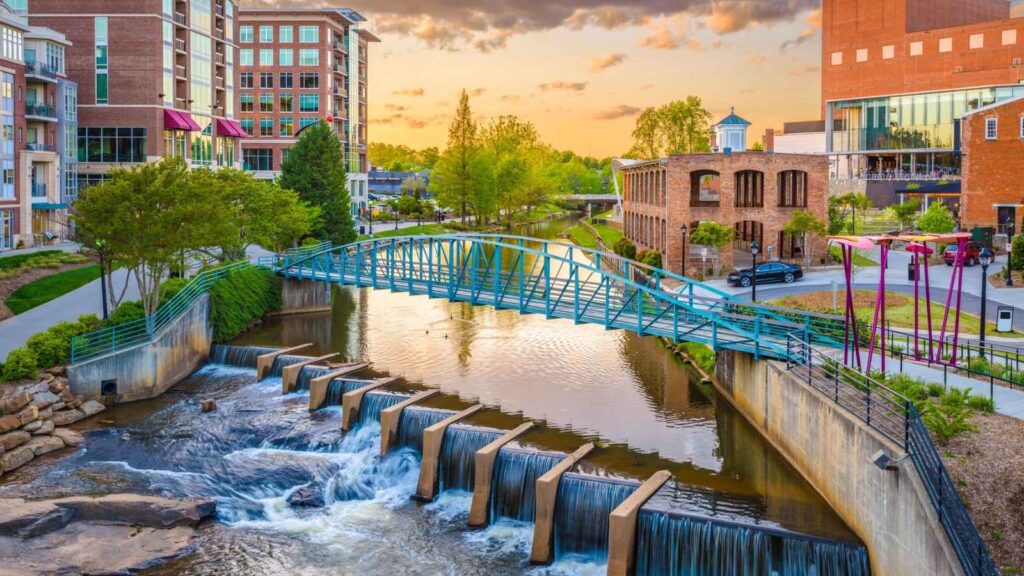
Scoundrel, Joe Cash’s French-American bistro on North Main Street, is the most decorated restaurant in Greenville’s history. Cash appeared as a guest diner at the Soby’s episode, and his restaurant earned the city’s first Michelin star in November 2025 and a 2026 James Beard Award finalist nod for Best Chef: Southeast. The beef tartare is finished tableside, the halibut and duck are among the top picks and the wine list is predominantly French with tableside decanting.
Nose Dive serves chicken and waffles with a maple gastrique worth building an afternoon around. Jianna, on the second floor above Main Street with a wraparound balcony overlooking the Falls, makes all its pastas in-house and pours one of the strongest wine programs in the city. Papi’s Kitchen runs different menus at lunch and dinner, with tortas leading at midday and a mole at dinner that earns the trip. Passerelle Bistro, a French bistro tucked into Falls Park, shifts its menu between lunch and dinner and maintains a quality-to-price ratio that builds neighborhood loyalty.
For a guided introduction, At the Chef’s Table Culinary Tour, run by Greenville History Tours, takes guests to five dining destinations, with chef introductions at each stop. Tours meet at The Lazy Goat at 170 Riverplace.
Asheville: One more stop worth making
Episode 12 of “Top Chef: Carolinas” brought the remaining contestants to Asheville for an Appalachian-focused episode that honored the community’s recovery from Hurricane Helene. Three of the city’s most respected chefs served as local guides. William Dissen’s The Market Place, open on Wall Street since 1979 and a pioneer of the farm-to-table movement in the region, showcased the culinary education portion of the episode.
Meherwan Irani, whose Chai Pani earned the James Beard Award for Outstanding Restaurant in 2022, joined the tour. Ashleigh Shanti, a Top Chef Season 19 alum, 2025 James Beard Media Award winner and the chef behind Good Hot Fish, rounded out an episode that treated Asheville less as a backdrop and more as an argument. All three restaurants are worth the drive from either Charlotte or Greenville.
The Carolina food moment is not a trend cycle. It is the result of chefs who stayed or came back, sourced locally before it was a marketing phrase and built restaurants that could hold their own in any market. “Top Chef: Carolinas” gave that reality a national stage; the Michelin Guide awarded stars, but the restaurants were already there.
Jennifer Allen is a retired chef turned traveler, cookbook author and nationally syndicated journalist; she’s also a co-founder of Food Drink Life, where she shares expert travel tips, cruise insights and luxury destination guides. A recognized cruise expert with a deep passion for high-end experiences and off-the-beaten-path destinations, Jennifer explores the world with curiosity, depth and a storyteller’s perspective. Her articles are regularly featured on the Associated Press Wire, The Washington Post, Seattle Times, MSN and more.