
Chocolate accounted for 51.7% of American confectionery spending last year, down from roughly two-thirds of the category a decade ago. The candy aisle heading into Halloween 2026 reflects that shift. Gummies and chews now occupy shelf space that chocolate bars held, and the reason traces back to a harvest forecast issued in West Africa this summer.
A harvest forecast that reversed a price collapse
Ghana’s cocoa regulator told Reuters that national production will fall by at least 16% in the 2026/27 season, which begins in September. COCOBOD cited possible El Niño conditions, heavy rainfall in May and June, swollen shoot disease, ageing farms and encroachment by illegal gold mining.
The Western and Western North regions, which together account for more than half of Ghana’s output, showed a low cherelle load, meaning fewer young pods survived to maturity. Output in Ivory Coast, the world’s largest producer, is expected to fall by more than 10%.
Traders responded immediately. New York cocoa gained 7.4% in a single session to $5,490 a metric ton on the news, according to Reuters commodities coverage. That matters because the market had spent the first quarter of 2026 heading the other direction. Cocoa fell to roughly $3,300 a ton by early spring, down from a record above $12,000 in late 2024, CNN reported. Retail prices did not follow, because the chocolate on shelves this year was made from beans purchased at the peak.
What manufacturers changed while prices were high
The adjustments show up in three places: the package, the recipe and the price tag. Mondelēz International and Hershey have both restructured supply chains and reformulated products to reduce exposure to cocoa, Food Dive reported, citing World Bank data showing prices bottoming at $3.24 per kilogram in March 2026 before climbing to $4.36 by June.
Hershey has described the practice as adjusting price pack architecture, which means fewer pieces in the same bag. Some makers have lowered the cocoa percentage in bars and raised the sugar share, a swap that is invisible on the shelf and obvious on the ingredient panel.
Home bakers hit the same math from the other side. A bag of chocolate chips is now one of the more expensive components in a standard cookie recipe, which is why formulas that distribute chocolate rather than lead with it, like brown butter pecan chocolate chip cookies, stretch further than a straight bar-based dessert.
What shoppers are paying
Prices for sugar and sweets rose 7.4% between July 2025 and July 2026, and increased 0.1%% in the single month from June to July, according to the USDA Economic Research Service. The agency attributes most of that movement to candy and chewing gum, the CPI subcomponent that contains most chocolate candy. ERS forecasts a 7.1% increase for the full 2026 calendar year, with a prediction interval running from 6 to 8.2%.
Volume has responded. Lindt raised prices 11.8% group-wide and saw chocolate sales volumes drop 7.5% in the first half of the year, CNBC reported. Barry Callebaut, the largest supplier of industrial chocolate, reported that global consumers bought 4.4% less chocolate in the third quarter than a year earlier.
The category that gained is the one that does not use cocoa. Nonchocolate candy has climbed from one-third of confectionery market share in 2015 to 40.9% in 2025, according to the National Confectioners Association. Gummy and chewy candies are the leading varieties across every generation surveyed. Cookies built on butter and sugar rather than cocoa, like Danish butter cookies, sit in the same economic position as the gummies gaining shelf space.
The industry is not forecasting a shortage
Hershey’s position runs counter to the alarm in the futures market. Chief Executive Kirk Tanner told investors on the company’s second-quarter earnings call that there is plenty of cocoa supply globally, pointing to healthier inventories, diversified sourcing and encouraging 2026 and 2027 West African crop data. Management projected cocoa cost deflation in 2027 and said it anticipates strong seasonal performance for Halloween, according to a transcript published by The Globe and Mail.
Diversification is the longer-term answer, and it is slow. Cote d’Ivoire and Ghana produce 2.4 million tonnes of cocoa a year between them. Brazil, the most frequently cited alternative origin, produces roughly 200,000 tonnes and has set a government target of 300,000, SWI swissinfo.ch reported. Brazilian cocoa accounted for less than 1% of Swiss cocoa bean imports in 2024.
What changes on the baking side
The reformulation trend extends past the candy aisle. Milk chocolate, which uses proportionally less cocoa mass than dark, held its position as the most purchased confection across every generation of American shoppers, while dark chocolate absorbed the steepest cost increases.
For fall baking, the same logic applies at household scale. Recipes that carry chocolate with oats, coconut or nuts, such as cowboy cookies, deliver a comparable result on a smaller quantity of chips. Cocoa powder remains cheaper per finished serving than couverture or bar chocolate, which is why brownies and cocoa-based cakes have held their cost position better than ganache or bark.
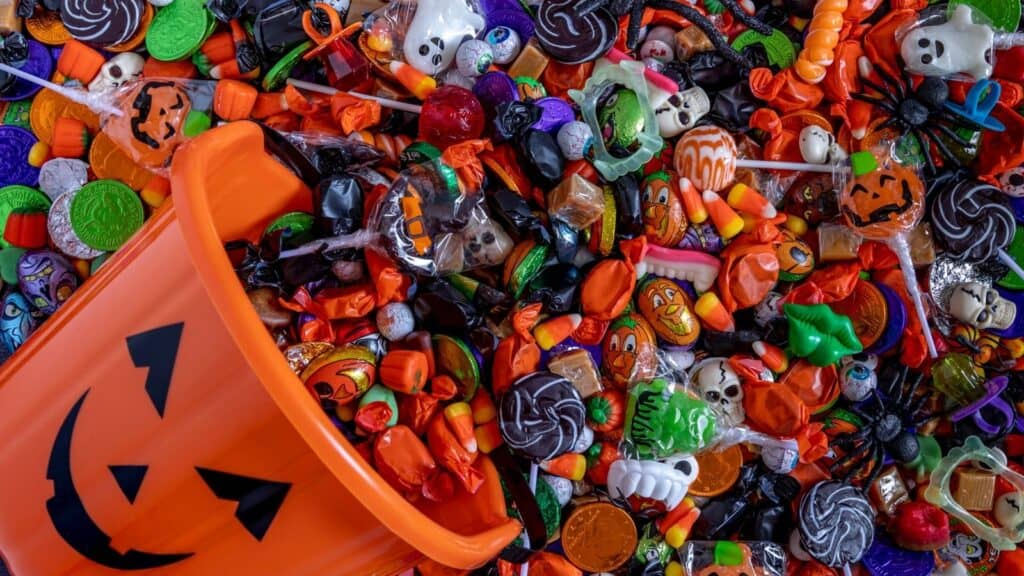
Trick-or-treat bags will still contain chocolate. There will be less of it per bag, and it will sit next to more gummies than it did five years ago. Nonchocolate candy is projected to reach $27.8 billion in sales across all channels by 2030.
Shruthi Baskaran-Makanju is a food and travel writer and a global food systems expert based in Seattle. She has lived in or traveled extensively to over 60 countries, and shares stories and recipes inspired by those travels on Urban Farmie.