
American landmarks still drive road trips and city breaks across the United States, but not every famous stop delivers once visitors arrive. The difference usually comes down to what people can actually see, how easy it is to access and whether the experience feels complete rather than reduced to a quick photo.
This post may contain affiliate links that may earn us a commission. For more information, see our Disclosures.
The National Park Service reported more than 323 million recreation visits in 2025, showing sustained demand for landmark-driven travel. That volume puts real pressure on infrastructure, spacing and movement on-site, where peak periods and record-setting attendance can limit visibility and slow movement, turning even well-known stops into frustrating ones when access is too constrained.
What makes a landmark worth the stop
The National Park Service recorded more than 13 million overnight stays across park units, with 26 sites reporting record visitation. That level of traffic tests how well destinations handle visitor flow, spacing and time spent at each stop. Landmarks that justify a detour tend to deliver quickly, with clear sightlines and easy access that do not depend on special equipment, timed entry or a long approach.
Several viewing areas can make a major difference. When people can take in a landmark from more than one angle, bottlenecks ease, and movement stays more fluid even during busy periods. A single fixed viewpoint usually does the opposite, concentrating crowds and reducing the visit to a brief stop.
Surroundings also matter, as trails, small exhibits and nearby districts extend the experience by giving visitors a reason to stay beyond the first look. When those extras are easy to reach, the detour feels worth it; when they are not, the stop can feel underwhelming.
Landmarks that justify the detour
Some destinations still hold up because the experience on arrival matches what visitors came for. At the Grand Canyon, the scale is clear from roadside overlooks, so the payoff comes without permits or a strenuous hike. Multiple viewpoints along the rim help spread people out and make the stop feel substantial rather than brief.
Yellowstone National Park works for similar reasons. Geothermal features sit close to marked paths and boardwalks, making geysers and hot springs accessible without complicated planning. Visitors can see several signature sights in one outing, which gives the park a stronger return on time than places built around a single viewpoint.
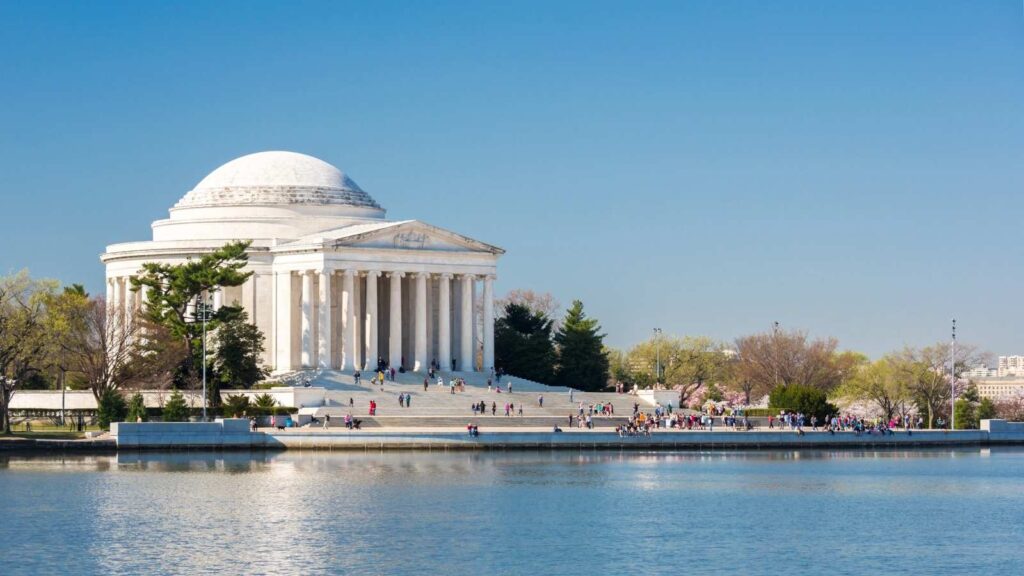
The National Mall succeeds for a different reason, with major landmarks, memorials and museums within walking distance and many of the best-known sites free to enter. That concentration creates flexibility, allowing visitors to build a worthwhile stop even if one museum has a line or one section is crowded.
At Zion National Park, a seasonal shuttle carries riders through the main canyon, stopping at major trails and viewpoints to distribute foot traffic and keep the core experience manageable during busy stretches. It is a controlled system, but visitors still get to see a lot once they are inside the park.
Well-known landmarks that often fall short
Some of the country’s most recognizable stops offer a more limited experience once visitors arrive. The Hollywood Sign is one example; it remains instantly recognizable, but the landmark is in a restricted area, with most viewing spots located at a distance. For many visitors, the experience comes down to navigating the route, taking a photo and then leaving.
Plymouth Rock often creates a similar reaction. Its historical name carries weight, but the actual site is small, heavily framed by expectation and visually underwhelming for first-time visitors who expect a more substantial stop. The visit is often brief, and the landmark itself rarely holds attention for long.
The Four Corners Monument is another case where recognition exceeds the experience, as the marked point is famous but centers on a single visual moment, usually followed by a photo and departure. That can make the drive feel longer than the amount of time visitors actually spend there.
Times Square is more complicated because the crowd is part of the attraction. The scale, screens and energy are unmistakable, but constant foot traffic often makes movement the main experience, leaving little room to pause, look around or feel that the stop offers much beyond the rush itself.
Crowds and access can change everything
Conditions on arrival can affect even major landmarks, with lines, checkpoint delays and limited entry points slowing access during peak periods. Movement also shifts throughout the day, as midday concentrates people into central viewing zones, while early and late hours often offer better spacing and clearer sightlines. At many large attractions, congestion builds around a few highly recognizable vantage points rather than across the whole site.
Operational systems add another layer, with shuttle routes, timed-entry reservations and designated pathways helping manage volume but also affecting the pace of the visit. Missing a shuttle window or arriving outside a timed slot can reduce what visitors see, no matter how famous the location is.
Photos often oversell the experience
Photos often present landmarks under conditions that are hard to find in real time. Promotional images tend to show open spaces and clean sightlines, even though many popular stops see steady traffic for much of the day. That gap between expectation and reality can decide whether a detour feels worthwhile.
Online posts can narrow the picture even further, as a single polished angle may look striking on screen, while the broader setting feels crowded, fenced off or harder to access in person. Visitors who arrive expecting that exact shot often discover that the surrounding experience is far less polished than the image suggests.
That is one reason many travelers now check recent reviews before heading out. These accounts often give a better sense of spacing, visibility and timing, helping visitors judge whether a stop is likely to feel rewarding or rushed.
What travelers expect from landmarks now
As travelers become more selective with time on the road, landmark decisions may depend less on name recognition alone and more on conditions such as crowd levels, entry systems and how much visitors can see without extra effort. Travel tools may shift toward live updates that show wait times and viewpoint access instead of relying only on fixed guidebook expectations.
Fame still gets people to the exit ramp, but it does not guarantee the stop is worth making. The American landmarks that continue to earn a detour are the ones that deliver quickly, clearly and without making visitors fight for the view.
Mandy is a luxury travel, fine dining and bucket-list-adventure journalist with expert insight from 46 countries. She uncovers unforgettable experiences around the world and brings them to life through immersive storytelling that blends indulgence, culture and discovery, and shares them with a global audience as co-founder of Food Drink Life. Her articles appear on MSN and through the Associated Press wire in major U.S. outlets, including NBC, the Daily News, Boston Herald, the Chicago Sun-Times and many more.