
With summer camps filling up fast and screens taking center stage, many parents are rethinking how to keep kids engaged in ways that matter. They want something close to home, but rich in creativity and challenge. One of the most impactful activities is how campfire science and DIY forts reveal how backyard adventures are raising resilient kids by turning open-ended play into real-world learning that builds confidence, adaptability and independence.
This post may contain affiliate link(s). As an Amazon Associate, I earn from qualifying purchases. See Disclosures.
As families rethink what learning can look like, they’re discovering that curiosity and creativity thrive outdoors. Here’s how these simple backyard experiences offer a flexible and impactful way to help kids flourish at home.
Why backyard adventures matter
Backyards might look simple at first glance, but they hold a surprising amount of developmental potential when used with purpose. That potential aligns with guidance from the World Health Organization, which recommends that children and teens ages 5 to 17 engage in at least 60 minutes of moderate to vigorous physical activity each day. These unstructured backyard moments, like running, climbing and building, naturally support that goal while building lifelong habits of movement and discovery.
Beyond physical health, backyard activities also support emotional and mental well-being. As reported by UNICEF, access to green spaces is associated with reduced stress, improved emotional regulation and stronger mental health outcomes in children. Studies also show that kids who spend more time in natural environments like wooded areas or gardens tend to have better focus, lower anxiety levels, and a greater capacity for emotional resilience.
This link between nature and emotional strength highlights why backyard play has such lasting value. Activities such as campfire science and DIY forts raise resilient kids not through structured lessons, but through repeated opportunities to adapt, explore and bring their ideas to life. From physical play to imaginative projects, backyards become dynamic learning zones with far more to offer than many people expect.
Campfire science: Learning by flame
There’s something about fire that captivates kids: the glow, the crackle, the sense of real-world danger under control. Fire-building is one of the most important outdoor survival skills children can learn. Beyond being practical, the process teaches patience, responsibility and hands-on problem-solving, sparking a real sense of accomplishment.
That learning doesn’t stop once the fire is lit, as fire safety becomes second nature, too. Kids learn to set boundaries, use water buckets responsibly and respect the unpredictability of flames, building self-discipline and emotional regulation. Even simple experiments like melting marshmallows or testing fire-starting methods give kids a chance to think critically, stay safe and get hands-on with real-world learning.
DIY forts: Engineering in the backyard
Kids love forts because they get to build their own world, where they make the rules and control the narrative. Creating these hideouts turns everyday objects like blankets, branches and bungee cords into real-world building tools and in the process, kids are introduced to concepts like structural stability, spatial reasoning and material behavior.
What starts as play quickly becomes a series of hands-on design challenges.
Each failed attempt, whether it’s a collapsed wall or a roof that won’t stay in place, teaches persistence, adaptability and the importance of learning through trial and error. And once the fort stands? It becomes a self-made sanctuary, a quiet space for reading, reflecting or imagining that gives kids a sense of ownership and security.
Skills they’re growing
What looks like simple play is skill-building at its best. Kids learn how to think critically, lead with confidence, move with purpose and connect with others. Here’s how these experiences leave a mark that lasts long after the last blanket fort comes down.
Problem-solving
When a fort collapses or the kindling refuses to catch, kids are being challenged to think critically. What might seem like minor frustrations become puzzles that they actively want to solve. “It helps them solve problems, build relationships within their peer group and gain a respect for nature,” according to Dr. Katie K. Lockwood, a pediatrician at Children’s Hospital of Philadelphia Primary Care, Flourtown.
As kids experiment with stick placements, adjust their fire-starting methods and discover what works through trial and error, they’re doing more than troubleshooting. Each moment becomes a hands-on lesson in persistence and adaptability, which are core ingredients for personal growth.
Independence and confidence
Letting kids take the lead, whether it’s gathering kindling, sketching out a fort design or managing their fire-safe setup, sends a message that they are trusted. Without step-by-step instructions or constant guidance, they learn to navigate decisions and outcomes using their own judgment.
When they complete something independently, the pride they feel is deep and earned. It lays the foundation for a strong sense of confidence and a readiness to take on greater responsibilities elsewhere in life.
Physical health
Outdoor play might look like plain fun, but it’s also a full-body workout that supports healthy growth and development. Activities like running, climbing, jumping and lifting activate muscles, build endurance and promote cardiovascular health, all while helping kids improve their strength and coordination.
Additionally, outdoor activities also support essential internal processes. Time outside helps kids burn off energy, but it also builds them up in key ways, such as boosting vitamin D production for strong bones and overall health, as well as developing balance, motor skills and physical competence in ways that lay the groundwork for lifelong healthy habits.
Creativity and focus
Whether they’re imagining a secret hideout or pretending they’re scientists tracking down backyard animals, these adventures fire up the imagination. But to bring that vision to life? That takes concentration. Kids need to figure out what materials they need, how to organize their space and how to execute their plans.
The balance between imagination and follow-through boosts both creativity and focus, encouraging kids to think through the steps needed to bring their ideas to life. As they plan, adjust and troubleshoot, they begin to see the connection between vision and execution, which offers more than artistic expression.
Social skills
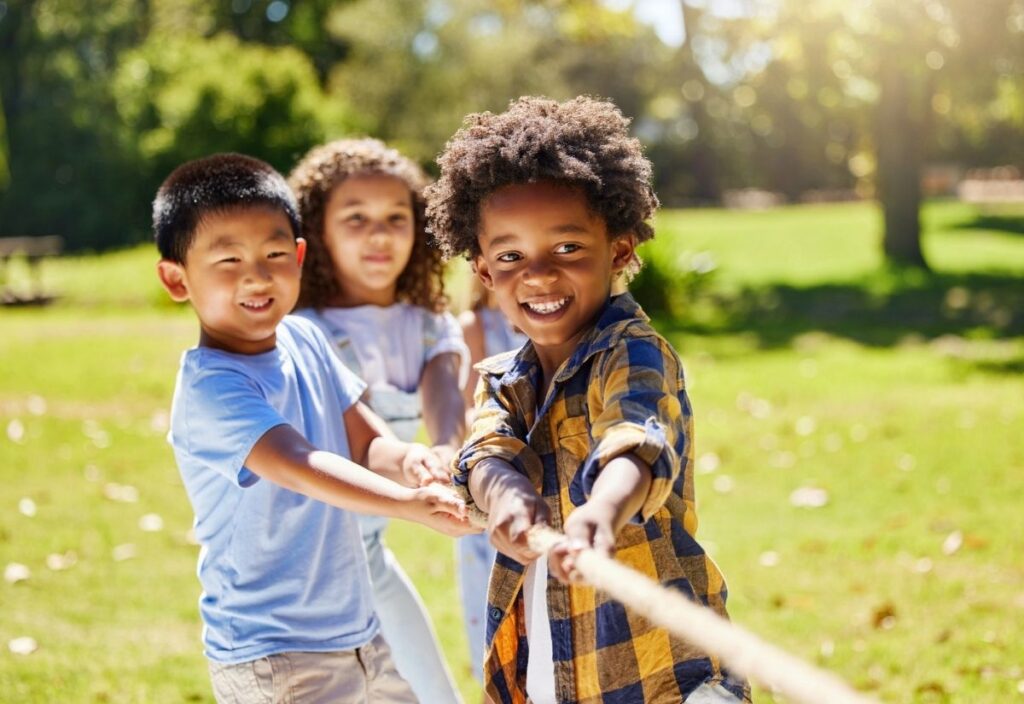
Backyard adventures often turn into group efforts, creating natural opportunities for collaboration and cooperation. Whether it’s siblings negotiating who gets the top bunk in the fort or friends taking turns tending the fire, kids are learning how to work together toward a shared goal. They practice communicating, sharing tools, resolving conflicts and offering support when things go wrong.
These everyday interactions mirror real-world social dynamics and help kids develop emotional intelligence in ways that feel intuitive and engaging. Empathy grows when they notice a friend is frustrated and patience builds as they wait their turn or adjust plans. And through it all, they begin to see the value of teamwork and the simple joy of building together.
The backyard advantage
Backyard play may look simple, but its impact is anything but. From lighting campfires to building forts, kids are quietly developing the skills they’ll need to thrive, whether in school, relationships or life. These outdoor moments invite curiosity, build independence and create space for confidence to grow, proving that resilience often starts just a few steps from the back door.
Jennifer Allen is a retired chef turned traveler, cookbook author and nationally syndicated journalist; she’s also a co-founder of Food Drink Life, where she shares expert travel tips, cruise insights and luxury destination guides. A recognized cruise expert with a deep passion for high-end experiences and off-the-beaten-path destinations, Jennifer explores the world with curiosity, depth and a storyteller’s perspective. Her articles are regularly featured in the Associated Press Wire, The Washington Post, Seattle Times, MSN and more.