
About 1 in 4 Americans now keep hummus in the refrigerator, a change that has evolved over the past two decades as the dish has moved from a specialty ingredient to a kitchen staple. On May 13, International Hummus Day celebrates this tasty combination of ingredients that can be so much more than a humble dip.
This post may contain affiliate link(s). As an Amazon Associate, I earn from qualifying purchases. See Disclosures.
Once largely confined to Middle Eastern and Mediterranean communities, hummus is now part of a U.S. market valued at roughly $5.29 billion, with continued growth expected through the end of the decade, according to Fortune Business Insights. That growth indicates more than demand for snack foods. The U.S. hummus market is projected to reach $12.51 billion by 2034, expanding at an annual rate of 11.35%, as the product moves into broader meal use.
A shared origin, not a single story
International Hummus Day also underscores a long-standing reality: no single country can claim ownership of the dish. Food historians generally trace hummus to the Levant, spanning present-day Palestine, Syria, Lebanon, Egypt and parts of southern Turkey. Its history is documented across multiple regions, including early references in medieval cookbooks and later regional adaptations, as outlined in research on the so-called Hummus Wars and its cultural history.
Written records of hummus-like preparations date back to at least the 13th century, with variations spreading widely during the Ottoman period, helping embed the dish across multiple cuisines. Modern disputes over ownership, including Lebanon’s 2008 challenge to Israel’s marketing of hummus, highlight how deeply tied the dish remains to cultural identity. But historians largely agree that the dish evolved across a region, not within a single national boundary.
Regional differences still shape the dish
Despite a common base of chickpeas, tahini, lemon and garlic, regional styles vary in meaningful ways. Lebanese hummus often includes more garlic and is served as a main dish, while Palestinian versions tend to be thicker and more tahini forward. On the other hand, Turkish variations shift toward sesame, altering both texture and flavor.
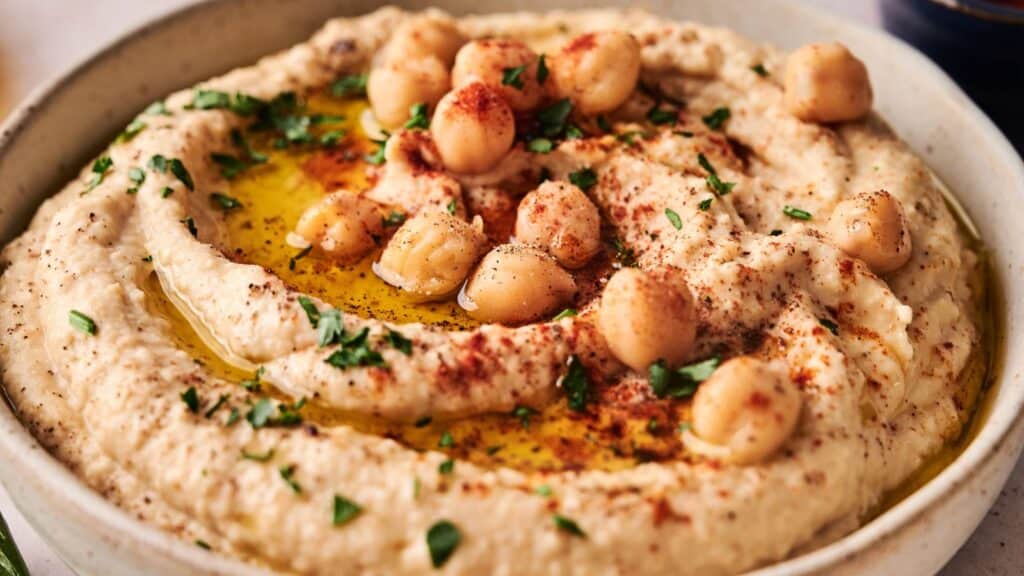
In Israel and Egypt, hummus is commonly served warm as a full meal, often topped with olive oil and spices. In Greece and Cyprus, it appears as part of mezze-style dining, influenced by centuries of shared culinary exchange.
New variations drive the growth
Classic chickpea hummus still accounts for the largest market segment in North America, according to Market Research Future, but newer variations are expanding the category. White bean hummus is among the fastest-growing divisions, while beet and roasted red pepper versions have become widely available. Lentil-based options are also gaining traction among consumers seeking variety in plant-based foods.
Edamame hummus represents a notable crossover, combining Levantine cooking techniques with soybeans central to East Asian cuisines. Market projections suggest continued growth in North America, with the category expected to expand steadily in the coming decade.
From dip to ingredient
In the United States, hummus is still most often paired with vegetables or pita chips, but its use is broadening. It is increasingly added as a sandwich spread in place of mayonnaise, thinned into sauces for pasta or grain bowls, served with roasted vegetables and incorporated into dressings and flatbreads. Those uses more closely show how hummus is served across the Middle East, where it functions as part of a meal rather than a standalone appetizer.
A role in how people eat now
The rise of hummus also aligns with broader dining habits. Mezze-style eating, built around multiple small dishes, positions hummus as a central component rather than a side. Similar formats appear globally, from Korean banchan to Japanese izakaya and Indian thali, reinforcing a shared approach to communal dining. In those settings, hummus is typically served alongside items like baba ganoush, olives and pickled vegetables, strengthening its role as both a standalone dish and part of a larger spread.
Growth driven by everyday use
For all the debate over where hummus belongs, its future is being molded somewhere else entirely. In American kitchens, it is being repurposed, adapted and folded into meals that look nothing like the dishes it came from. The argument over ownership continues, but the way people actually use hummus suggests that question may no longer matter as much as it once did.
Jennifer Allen is a retired professional chef and long-time writer. Her work appears in dozens of publications, including MSN, Yahoo, The Washington Post and The Seattle Times. These days, she’s busy in the kitchen developing recipes and traveling the world, and you can find all her best creations at Cook What You Love.