
Once crucial to navigation, lighthouses now stand as cultural markers linking past and present along the nation’s shores. National Lighthouse Day guides the way, honoring coastal icons across the United States as reminders of maritime grit, community identity and the changing tides of technology. Their silhouettes still command attention, offering a glimpse into the history that shaped entire regions.
This post may contain affiliate links that may earn us a commission. For more information, see our Disclosures.
Preserving historic lighthouses takes active coordination between national groups and local volunteers. From fundraising campaigns to routine upkeep, ongoing support helps ensure these coastal landmarks remain accessible, safe and central to maritime education.
Early aids to navigation
Lighthouses have served as navigational tools for centuries, positioned to mark harbor entrances and warn ships of coastal hazards such as reefs, sandbars and rocky cliffs. These beacons symbolize the connection between land and sea, standing out in the landscape as cultural markers and technological achievements. In the Great Lakes region, where visibility of shoreline features guided early travelers, Indigenous communities used natural landmarks for orientation and developed place-based names long before modern navigation existed.
As the nation’s commerce expanded, the need for permanent aids to navigation became urgent. Lighthouse stations soon became symbols of settlement and organized life along coasts that were once described as wild and remote. Their lights signaled both danger and safety, offering direction to those caught in uncertain conditions and changing weather.
Marking a national tradition
National Lighthouse Day began with a law signed by President George Washington on Aug. 7, 1789. This gave federal backing to lighthouse construction and maintenance, setting a national precedent for navigational safety. Two centuries later, Congress marked the date again by designating it as National Lighthouse Day.
Although the 1989 resolution applied only to that year, lighthouse organizations and coastal communities continue to observe the date annually. Across the country, many museums host special exhibits while towns plan tours and local events. Historians and volunteers share how lighthouses shaped regional identities and aided maritime trade. For many, it reinforces the lasting connection between coastal culture and the lights that once guided it.
Icons from coast to coast
Lighthouses do more than tell time and the tide. From storm-battered towers to cliffside beacons, each one provides a window into coastal history that still draws travelers off the beaten path, especially during summer travel season. These remain essential stops for those looking to explore America’s maritime past up close.
Boston Light
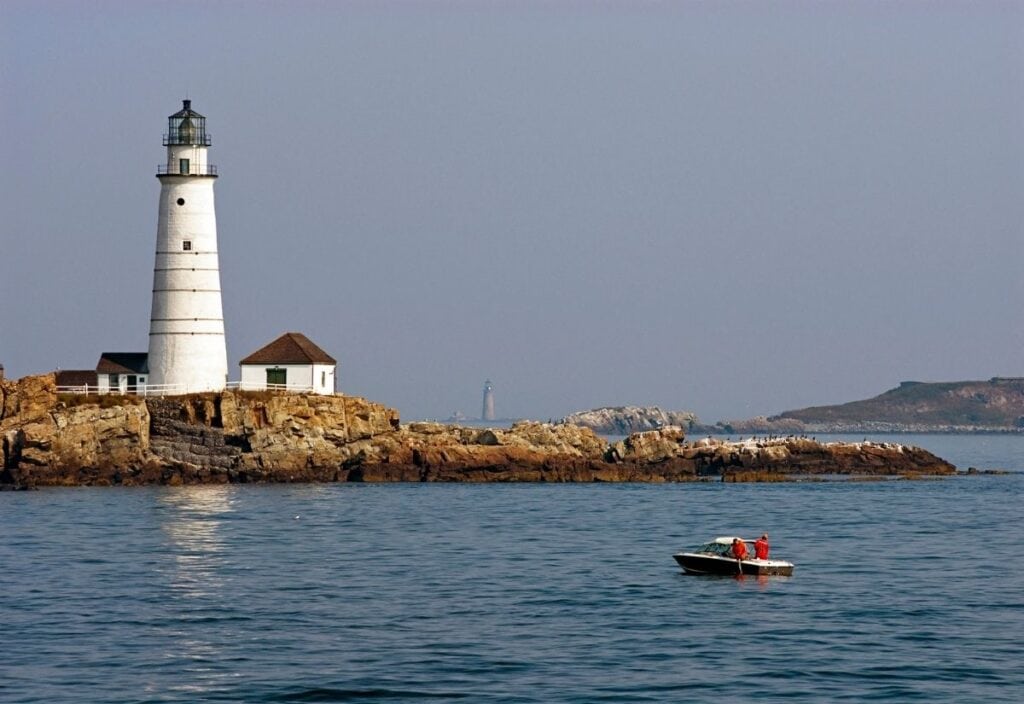
First lit in 1716 and rebuilt in 1783, Boston Light is the oldest lighthouse site in the United States. It still operates under Coast Guard supervision with a resident keeper, which is the last of its kind today. The station’s long history and continued service make it a must-visit for anyone exploring Boston Harbor.
Chicago Harbor Light
Built in 1893 for the World’s Columbian Exposition, Chicago Harbor Light once guided ships through a vital junction linking major United States waterways. It was moved to its current spot in 1917 during breakwater construction. As the last remaining lighthouse in Chicago, it remains an iconic feature near Navy Pier and a visual anchor on the city’s lakefront.
Point Arena Lighthouse
This 1908 lighthouse replaced an earlier tower destroyed in the 1906 San Francisco earthquake. It was among the first in the nation to use reinforced concrete for seismic durability. The site now operates under nonprofit management and offers panoramic ocean views. Visitors can tour the tower, stay overnight or support its preservation through local programs.
Ponce de Leon Inlet Light
Completed in 1887, this 175-foot tower is the tallest lighthouse in Florida. It originally featured a first-order Fresnel lens that was visible nearly 20 miles out to sea. Today, it serves as a museum and remains one of the country’s most intact light stations. Monthly full moon tours offer visitors a rare chance to explore it after dark.
Alcatraz Island Light
First lit in 1854, the Alcatraz Island Light was the earliest lighthouse on the West Coast. A taller 95-foot tower replaced the original in 1909 to clear the newly constructed prison. It became automated in 1963 after the penitentiary shut down. The lighthouse still operates to this day and remains a defining feature of the island’s historic landscape.
Support through action
Preserving these coastal landmarks requires more than appreciation. National organizations like the U.S. Lighthouse Society and the American Lighthouse Foundation rely on memberships, fundraising and volunteer support to maintain historic towers and provide educational programs.
Local preservation groups often organize hands-on work such as painting, landscaping and basic maintenance. Annual events, including National Lighthouse Day and maritime festivals, bring in visitors and raise awareness for ongoing restoration efforts. Even sharing photos or stories online helps draw new attention to lighthouse preservation.
Lighting the way forward
Lighthouses once warned ships of danger, but today they stand as markers of heritage, resilience and shared identity. While modern navigation has moved on, these structures continue to draw interest as cultural landmarks and historical touchstones. Preserving them is not just about maintaining old buildings; it’s about keeping a piece of the American coastline’s story alive for generations to come.
Jennifer Allen is a retired chef turned traveler, cookbook author and nationally syndicated journalist; she’s also a co-founder of Food Drink Life, where she shares expert travel tips, cruise insights and luxury destination guides. A recognized cruise expert with a deep passion for high-end experiences and off-the-beaten-path destinations, Jennifer explores the world with curiosity, depth and a storyteller’s perspective. Her articles are regularly featured on the Associated Press Wire, The Washington Post, Seattle Times, MSN and more.