
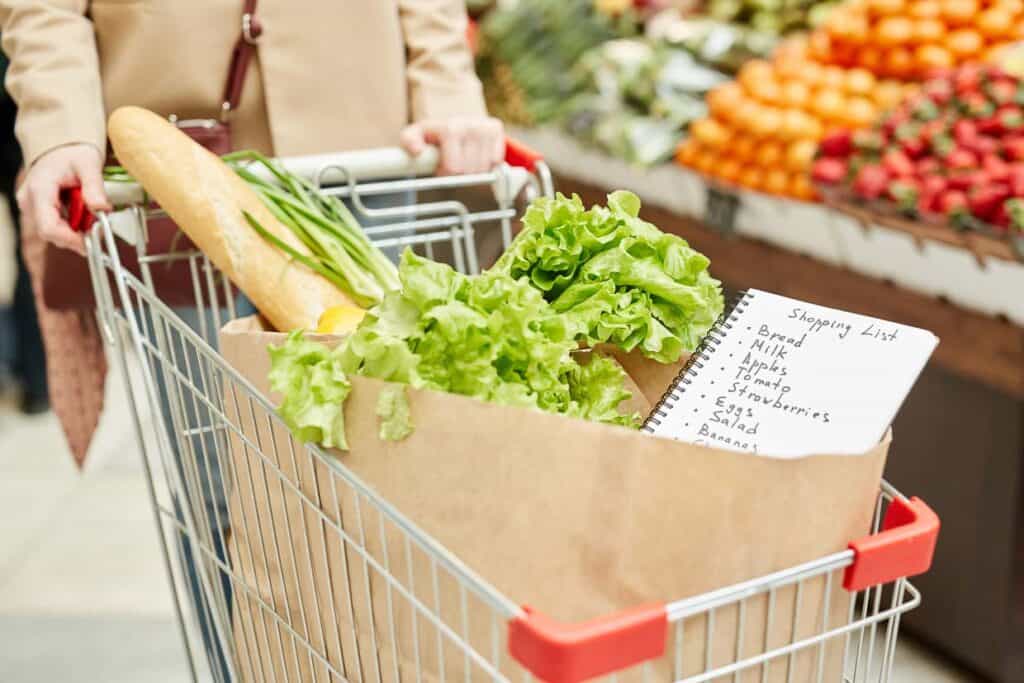
Passover grocery planning now starts before the cart reaches the aisle, with households narrowing their lists and figuring out how one round of shopping will cover the Seder and the days after. The holiday still brings its familiar staples to the table, but the buying approach has become more deliberate as families try to get through a full week of meals with fewer extra trips and less food left behind.
This post may contain affiliate link(s). As an Amazon Associate, I earn from qualifying purchases. See Disclosures.
Purdue University’s latest national consumer data found that 82% of U.S. consumers changed their grocery shopping behavior in 2025. Passover offers a timely read on that broader buying habit, as households rely on tighter lists, earlier prep and more deliberate meal planning to carry a multiday occasion from the first shop to the last leftovers.
Grocery costs tighten holiday planning
Food prices continue to limit how households plan each grocery trip. Purdue found that 56% of consumers who changed their grocery shopping behavior in 2025 cited higher overall food prices as the main reason.
“As grocery prices get steeper, setting aside funds for kosher variations and specialty products becomes much harder,” says Ksenia Prints of At the Immigrant’s Table. “This is why my family started baking our own matzos, including a gluten-free version, to eat throughout the eight days of the holiday. We still get certified matza shmura for the Seder itself, but these homemade versions taste better, cost a fraction of the price of the originals and can be made at home.”
For Passover households, the first holiday shop now carries more pressure because it often has to cover ritual meals, pantry basics and meals for the days that follow. Under those conditions, ingredients that can be reused across several meals and items that can be cooked once and served again earn more space on the list.
Passover cooking starts before the week
Planning continues beyond the store because much of the work happens before the holiday week begins. In the 2025 IFIC Food & Health Survey, 32% of consumers influenced by convenience said easy preparation was the biggest factor in what they bought, which fits the make-ahead approach many Passover households use before the holiday starts.
In practice, that often means making soups, kugels, braises and desserts ahead of time so the holiday depends less on daily cooking and more on reheating and planned meals. U.S. Department of Agriculture food safety guidance says leftovers should go into shallow containers for fast cooling and are generally best used within three to four days in the refrigerator, while freezing can extend the life of prepared food when households cook more than they will use right away.
Pantry planning helps food last
Food waste becomes part of the same planning problem once the holiday basket is home, because even a carefully planned grocery trip can fall apart when households misjudge how long food will keep. A 2025 national survey found that 43% of Americans always or usually throw away food near or past the date listed on the package.
The Food and Drug Administration says confusion over date labeling accounts for an estimated 20% of consumer food waste, and apart from infant formula, manufacturers generally are not required by federal law to use quality-based date labels on packaged food. That leaves many households relying on package dates that do not always tell them whether food is still usable.
For Passover shoppers, that means deciding early which perishables to use for the opening meals and which foods can last longer in the pantry, refrigerator or freezer. Relying on item-specific storage times instead of a date alone gives households a better way to manage eggs, leftovers, prepared salads and other foods that may not last through the full holiday if they are bought too soon or in oversized amounts.
Travel changes the food plan
Travel adds another layer of planning, especially when holiday food has to be packed, carried or stored safely. OU Kosher notes that prepared meals are often produced in advance and shipped long distances, and says kosher-for-Passover labeling must be easy for vendors and final consumers to identify so the meals are not mistaken for non-Passover fare.
USDA guidance adds the food safety side, advising travelers to use coolers packed with ice or frozen gel packs and to follow the two-hour rule once perishable foods come out of the cooler. Because of these limits, travel-friendly foods and a shorter grocery stop after arrival are more practical than transporting every perishable dish from home.
Planning leads Passover shopping
Passover has become a clear example of how Americans handle multiday food occasions with tighter budgets and less room for error. Success depends less on buying extra and more on knowing exactly what the week requires. For households trying to keep the holiday manageable, the better strategy is a tighter plan, not a fuller cart.
Jennifer Allen is a retired professional chef and long-time writer. Her work appears in dozens of publications, including MSN, Yahoo, The Washington Post and The Seattle Times. These days, she’s busy in the kitchen developing recipes and traveling the world, and you can find all her best creations at Cook What You Love.