
Scotland’s boltholes, including small inns and coastal hideaways, are attracting travelers looking for stays connected to local tradition. Visitors are turning away from mass-market tourism in favor of converted croft houses and seaside inns overlooking working harbors. These boltholes offer the distinct character that sets them apart from larger hotels.
This post may contain affiliate links that may earn us a commission. For more information, see our Disclosures.
Some of these boltholes focus on heritage dining featuring local produce and seafood, while others pair their stays with whisky tastings or hands-on experiences like foraging and oyster tours. Each one offers an authentic way to experience Scotland’s traditions that keeps travelers coming back.
Rise of authentic travel
Travelers now look for trips that honor local traditions, steering away from cookie‑cutter breaks and instead seeking holidays tied to authenticity. BBC’s 2025 forecast captured this with the off‑the‑beaten‑track goes mainstream trend, which highlights how community, culture and nature now shape mainstream travel choices.
The Wee Hotel Company embodies this movement with its cozy portfolio. Its boltholes stay small in scale, often as converted croft houses or seaside inns, but they convey regional history and design through local storytelling. Each property fits its setting and offers guests an experience that is both intimate and unmistakably Scottish.
Scotland’s notable landscapes
The jagged Cuillin peaks on Skye and the rolling hills of Argyll and Bute show the range of landscapes across western Scotland. Adventurers can brave the chill of Loch Linnhe for wild swimming or follow misty trails where deer and hares slip quietly across the path. As night settles, the skies glow with constellations and, on occasion, the aurora borealis, giving Scotland’s wilderness an unforgettable edge.
Gourmet heritage dining
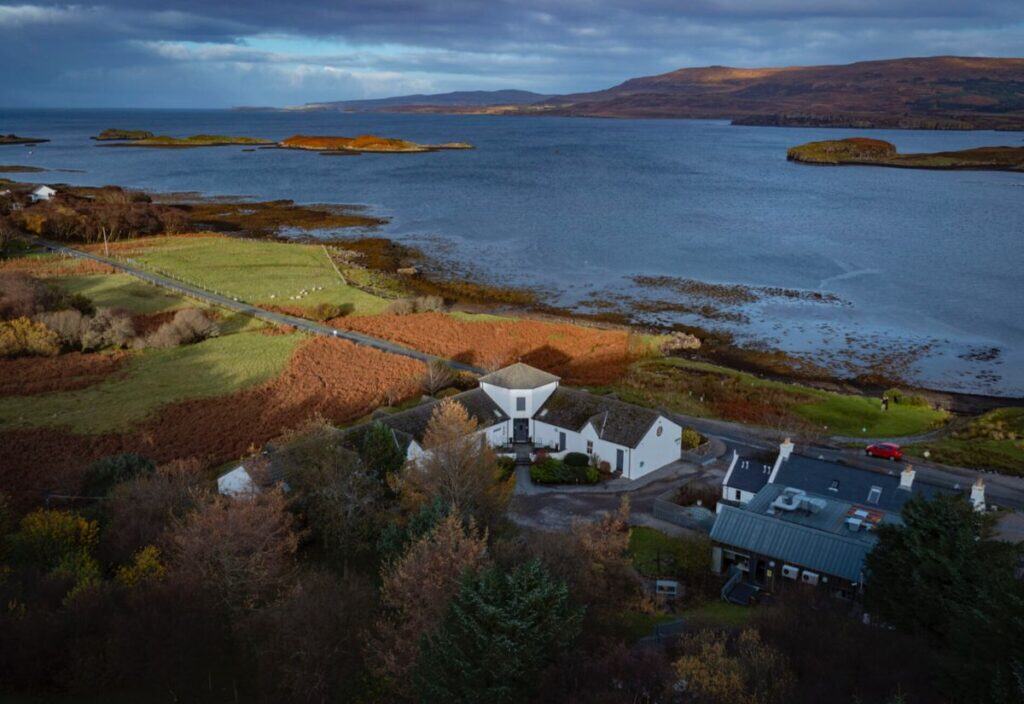
Scottish boltholes often double as culinary destinations, and nowhere is this clearer than at The Three Chimneys on Skye. Menus feature hand‑dived scallops from nearby lochs, venison from red deer and partridge roasted to perfection. The Michelin‑recognized kitchen transforms these ingredients into dishes that honor Skye’s heritage while delighting modern palates.
The experience extends well beyond food, with only six guest rooms beside the restaurant. After four decades, the team continues to forge lasting relationships with local suppliers by sourcing fresh produce and letting the ingredients speak for themselves.
Coastal seafood retreats
Along Argyll’s coast, The Pierhouse Hotel in Port Appin serves shellfish brought straight to its doorstep, with mussels, lobsters and oysters arriving fresh from Loch Creran. Chef Michael and his team work closely with farmers and fishermen to bring the finest produce to the table, making each menu a clear expression of the region.
Guests choose between three dining spaces: the main restaurant with wide views, the Ferry Bar with its crackling stove or the quieter Lismore Dining Room, all serving the full a la carte menu. These daily catches drive the seasonal Wee Winter Breaks, which pair discounted midweek stays with memorable seafood feasts that celebrate Argyll’s sense of place.
Whisky meets fine dining
Talisker Distillery, founded in 1830, remains the island’s oldest working distillery and continues to carry forward Skye’s whisky heritage. In collaboration with The Three Chimneys at Talisker, it now presents a gastro-distillery concept where Scotland’s whisky tradition meets fine dining, highlighting both heritage and flavor better than ever.
The location on Loch Harport brings the power of the sea right to the table, with waves crashing beyond the windows as guests sip and dine. Set beside the new visitor centre, the restaurant frames each meal with dishes that carry Talisker’s smoky notes while showcasing Skye’s local produce, all against the backdrop of the Cuillin Hills.
Engaging local experiences
The appeal of boltholes extends beyond the plate, inviting guests into the daily life of Scotland’s coast and countryside. At Loch Creran, visitors join oyster tours to learn how shellfish are farmed and harvested. They also take foraging walks that uncover edible seaweeds and wild herbs that connect them to Scotland’s natural pantry.
Coastal strolls at dawn and dusk often reveal seals basking on rocks or eagles circling above the cliffs. As night falls, clear winter skies turn the outdoors into a natural observatory where guides point out constellations and share folklore. These moments weave Scotland’s wild beauty into each stay, grounding the experience in its landscape.
Scotland’s bolthole boom
Scotland’s boltholes may be smaller than major hotels, yet they leave a lasting impression by weaving land, food and tradition into every stay. They show that luxury can feel intimate, with wild landscapes set alongside Michelin‑recognized dining and community‑shaped experiences. For travelers chasing authenticity, even a short break in these retreats can turn into a lasting memory.
Jennifer Allen is a retired chef turned traveler, cookbook author and nationally syndicated journalist; she’s also a co-founder of Food Drink Life, where she shares expert travel tips, cruise insights and luxury destination guides. A recognized cruise expert with a deep passion for high-end experiences and off-the-beaten-path destinations, Jennifer explores the world with curiosity, depth and a storyteller’s perspective. Her articles are regularly featured on the Associated Press Wire, The Washington Post, Seattle Times, MSN and more.