
The traditional ham might have some competition this year, with Easter tables making room for a mix of seasonal mains and fresh sides. Lamb still holds its place as a go-to centerpiece on many tables, while seafood and spring vegetables step in as reliable options that cook faster and suit a wider range of preferences.
This post may contain affiliate link(s). As an Amazon Associate, I earn from qualifying purchases. See Disclosures.
Easter tables continue to center on shared meals that bring families together, keeping food at the core of the celebration. With menus built around options that cook faster, scale for different group sizes and keep preparation manageable, the kitchen stays under control without anyone getting stuck at the stove.
Lamb remains an Easter staple
Easter spending remains focused on food, with about $7.5 billion of the projected $24.9 billion total set aside for meals as families gather. During these gatherings, lamb remains a go-to centerpiece supported by its long-standing place in Easter menus.
Easter week remains a key driver for lamb purchases, especially for large family gatherings. Roasted leg of lamb and rack cuts remain favored for presentation, while smaller options such as chops, shoulder cuts and boneless roasts work well for flexible meal sizes and shorter cooking times. Preparation styles often lean toward lighter, herb-forward flavors, such as garlic, rosemary and thyme, commonly paired with simple roasting or grilling.
Some menus draw on Mediterranean or Middle Eastern influences, with yogurt-based marinades or spice blends that add depth without heavy sauces. Grilled lamb served with seasonal vegetables also appears more often, offering a familiar setup for many American tables.
Seafood joins holiday menus
Alongside lamb, seafood is becoming a regular part of Easter meals, giving households an option that fits a wider range of preferences. It often serves as a second main dish or as an alternative, especially for guests looking for lighter choices, and its shorter cooking time makes it easier to prepare compared with larger cuts of meat.
Common seafood choices include seared salmon, baked cod and glazed trout, all of which work well with simple seasoning such as lemon, garlic, herbs and olive oil or butter. These dishes keep preparation straightforward while still offering a full main course. Shrimp also remains a go-to option, with dishes such as shrimp ceviche served either as a starter or alongside other items in a shared spread.
In many communities, seafood takes on a social role, with fish fries drawing crowds in cities where local groups host large gatherings around the meal. At home, spreads often include shrimp platters, crab cakes or smoked salmon boards, while coastal regions lean toward pasta dishes such as linguine with clams. In restaurants, brunches often feature raw bars with oysters, shrimp cocktails and crab.
Fresh produce leads Easter plates
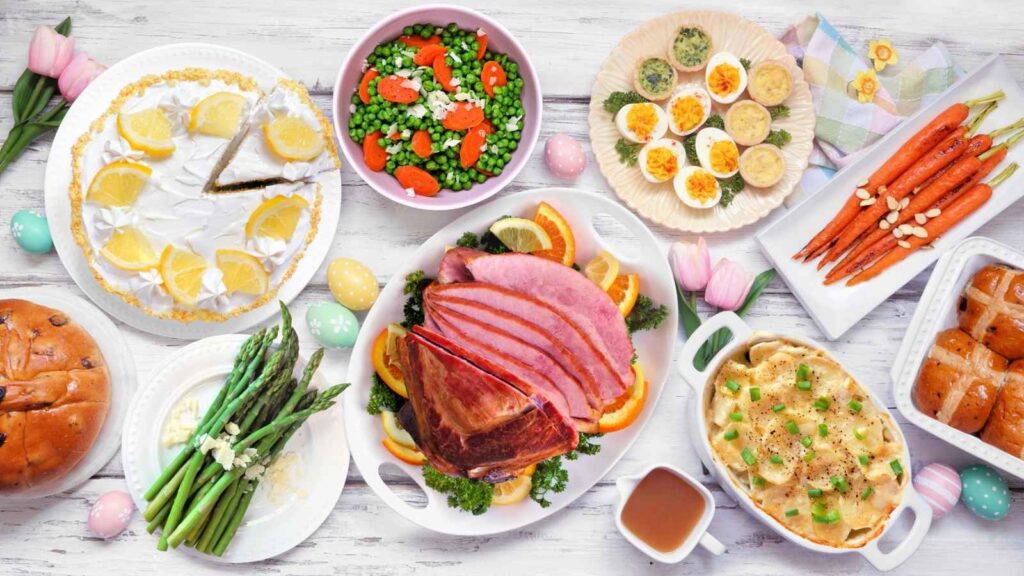
Beyond proteins, seasonal spring produce also appears on Easter menus. Carrots and leafy greens are widely available, giving hosts more options to build meals around fresh ingredients. Asparagus is common across many Easter spreads, often roasted or finished with lemon and butter alongside main dishes, while peas and carrots remain a staple in familiar side dishes, especially in regions where casseroles are part of holiday meals.
Lighter dishes, such as mixed greens paired with herb-based dressings, help balance richer proteins and add contrast to heavier mains. Fresh herbs such as parsley, mint and chives serve as garnishes for both vegetables and protein-based recipes. Simple cooking methods keep the focus on freshness and reduce time in the kitchen while supporting meals that include more plant-based choices.
Holiday meals grow more flexible
Easter meals still center on familiar dishes, but households adjust what and how they serve based on dietary needs, seasonal availability and food costs. This approach indicates a broader shift in how families plan holiday meals, with decisions that fit both their guests and their budgets. Future holiday menus will likely continue to combine tradition with flexible choices that make meals easier to manage while keeping their place at the table.
Zuzana Paar is the visionary behind five inspiring websites: Amazing Travel Life, Low Carb No Carb, Best Clean Eating, Tiny Batch Cooking and Sustainable Life Ideas. As a content creator, recipe developer, blogger and photographer, Zuzana shares her diverse skills through breathtaking travel adventures, healthy recipes and eco-friendly living tips. Her work inspires readers to live their best, healthiest and most sustainable lives.