
The global potato chip flavors offer a snapshot of how far that original chip has been adapting to cultures, cuisines and cravings in every corner of the world. What started as a diner’s complaint about thick-cut fried potatoes was solved by slicing a new batch razor-thin, frying them to a crisp and seasoning them with salt. That moment of improvisation wasn’t just the birth of a snack; it was the beginning of a global flavor movement that continues to evolve today.
This post may contain affiliate link(s). As an Amazon Associate, I earn from qualifying purchases. See Disclosures.
There’s a reason one person might reach for salt and vinegar while someone else grabs a bag of grilled squid: taste is personal, but it’s also cultural. What might seem unusual in one country is a grocery store staple in another, and that’s exactly what makes global potato chip flavors so intriguing.
A brief history of potato chip choices
According to The Epicurean Trader, the story of the potato chip traces back to 1853 and a chef named George Crum in Saratoga Springs, New York. After repeated complaints from a customer about thick-cut fried potatoes, Crum sliced a batch paper-thin, fried them until crunchy and added a pinch of salt. To his surprise, the result was a hit, and what started as a moment of frustration ended up creating one of the world’s most popular snacks.
As time went on, chips gained popularity across the United States and eventually around the world. With the growth of packaged snacks in the 20th century, potato chips became a staple in pantries. In the beginning, they were only lightly salted, but everything changed in the 1950s when flavoring techniques transformed the industry. The first flavored chips emerged in Ireland, starting with cheese and onion. It wasn’t long before barbecue, sour cream and onion, and other bold flavors began to appear in mainstream markets, setting the stage for the wild variety available today.
One reason brands like Lay’s and Pringles continue to dominate the snack market is their steady innovation in flavor and texture. Brand Valuer explains that Lay’s has become known for its localization strategy, which tailors offerings to regional palates with flavors like Sichuan Spicy Hot Pot in China, Magic Masala in India and Prawn Cocktail in the UK. Pringles, meanwhile, has taken a creative path through limited-edition drops and unconventional flavors. From Honey Mustard and Pizza to the much-discussed Thanksgiving Dinner collection, Pringles keeps consumers curious.
Strange potato chip flavors that stand out
These flavors aren’t just quirky; they’re bold, local statements disguised as snacks. Some might raise eyebrows, others spark cravings, but all of them remind us that taste is as much about place as it is about flavor.
Tzatziki
Inspired by the beloved Greek dip, Lay’s launched tzatziki-flavored chips in 2024, which deliver a cooling blend of cucumber, garlic and yogurt-like tang. The flavor captures the essence of a summer meal in Greece — refreshing and slightly herbal.
Iberian ham
Iberian ham-flavored potato chips aim to capture the deep, savory richness of jamón ibérico, one of Spain’s most iconic cured meats. Often seasoned with real ham extract, they deliver a smoky, umami-heavy crunch that’s surprisingly close to the real thing. They’re a favorite in Spanish tapas bars and have become something of a cult snack throughout Europe.
Kimchi
Calbee, one of South Korea’s leading snack brands, introduced kimchi-flavored potato chips as a nod to the country’s most iconic fermented dish. The flavor blends chili heat, sour vinegar and fermented funk to create something tangy and truly distinctive. They’ve become popular not just locally but in global Korean markets, and they pair surprisingly well with beer.
Mustard pickle
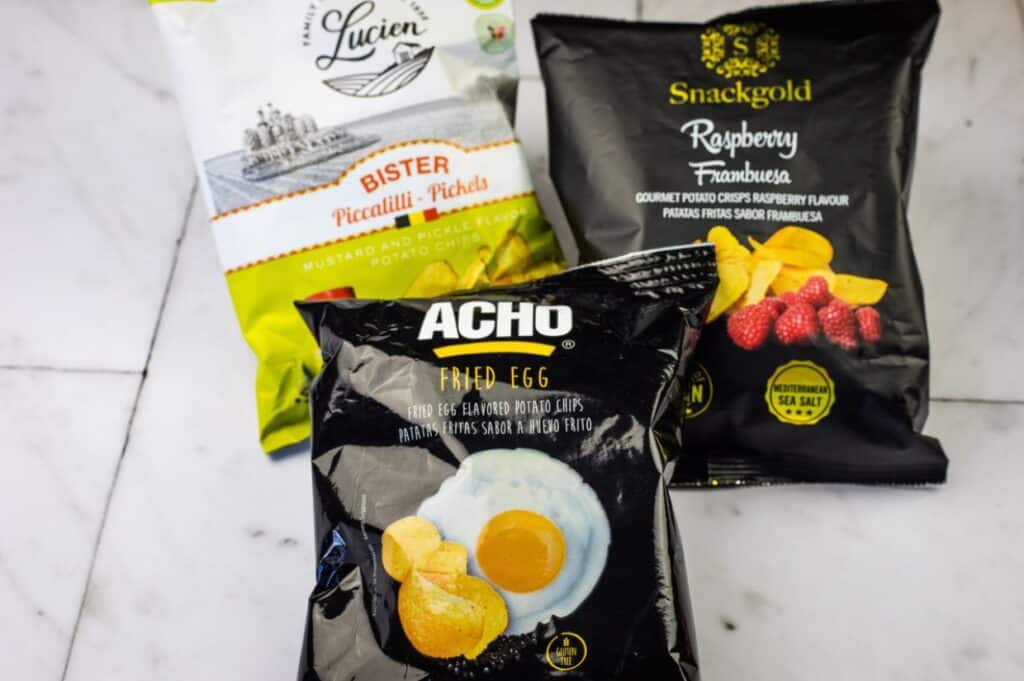
This flavor plays on the classic British sandwich spread, blending mustard’s sharp bite with the sour tang of pickled relish. It’s a chip that feels both traditional and edgy — perfect for fans of salt and vinegar who want something extra punchy. Lay’s has also released its own version in the UK, offering a similar balance of sharpness and tang that resonates with local tastes.
Truffle
Truffle chips are a luxurious take on everyday snacking. They echo the earthy richness of French black truffles, often dusted with natural flavoring or real truffle oil. Common in upscale Parisian markets, they’ve also become a favorite for wine nights or elevated apéro spreads.
Fried egg
This flavor first gained attention in Spain, where chips are often paired with wine, cheese and even eggs as part of a casual tapas spread. The fried egg chip tastes uncannily close to the real thing — crispy whites, creamy yolk and just a hint of buttery salt. Made by brands like San Nicasio and Torres, they’ve gone from novelty to mainstay in many Spanish homes. They’re also gaining traction in specialty stores abroad, often featured as part of gourmet snack collections.
Hot chili squid
Thailand’s snack aisles feature bold flavors, and hot chili squid chips are no exception. These crisps blend the tangy heat of Thai chilies with the savory depth of dried squid, a flavor combination common in local bar food and street snacks. As usual, brands like Lay’s Thailand and Bento lean into this profile, offering chips that are punchy, salty and a bit smoky.
Magic masala
Lay’s India took cues from classic chaat spices when it created Magic Masala. The chips are layered with cumin, coriander, chili and a pungent burst of dry mango powder, capturing the intensity and complexity of Indian street snacks. They’ve become one of the brand’s most recognizable flavors in the region, as they’re not just a snack but a cultural touchpoint.
Grilled eel
This flavor captures the glazed, caramelized taste of unagi, often found in Japanese and Chinese cuisine. Grilled eel chips combine sweet soy-like notes with a smoky finish and are surprisingly well-received across China. Though unfamiliar to many Western snackers, they’ve become a familiar sight in major Chinese supermarkets.
Cappuccino
Part of Lay’s “Do Us a Flavor” campaign, cappuccino chips hit shelves in 2014 sparking confusion and curiosity in equal measure. The flavor tried to mimic the cinnamon-dusted creaminess of a café cappuccino on a potato chip. While the novelty drew attention, most found the taste offbeat at best. It lives on as a memorable misstep in flavor history.
Mint mischief
Lay’s India took a wild turn with Mint Mischief, a chip that surprised many with its cool, herbaceous edge. It doesn’t just taste like mint; it pairs that freshness with a savory foundation, making it oddly addictive to some and utterly confusing to others. The flavor plays off the country’s love for bold, layered spices with a twist that leaves a tingling finish on the tongue.
Cucumber
Cucumber-flavored chips first caught global attention for their unexpected lightness. Instead of leaning into salt or spice, these chips aim for freshness, like biting into a cool slice of cucumber on a hot day. Lay’s China popularized them, turning them into a talking point on social media for their unusual but oddly pleasant profile.
Seaweed
Seaweed-flavored chips are especially popular across East Asia, where nori and laver are already household staples. These chips offer a briny, umami-forward experience with a gentle crispiness that mirrors the texture of dried seaweed snacks. In Japan and Korea, they’re often paired with rice or soup, either as a side dish in casual meals or as an in-between snack that bridges traditional and modern dining. The mild seaweed saltiness complements steamed rice, and the chips add crunch to the softer textures of brothy dishes.
Crunching across cultures
For something as simple as a snack, global potato chip flavors say a lot. They reflect tastes shaped by memory, region and the occasional stroke of culinary bravery. Some flavors reflect national staples, while others push boundaries just far enough to spark curiosity. In every case, a chip becomes more than a crunch; it provides a shortcut to the flavors of a place, and sometimes, its personality, too.
Jennifer Allen is a retired professional chef and long-time writer. Her work appears in dozens of publications, including MSN, Yahoo, The Washington Post and The Seattle Times. These days, she’s busy in the kitchen developing recipes and traveling the world, and you can find all her best creations at Cook What You Love.