
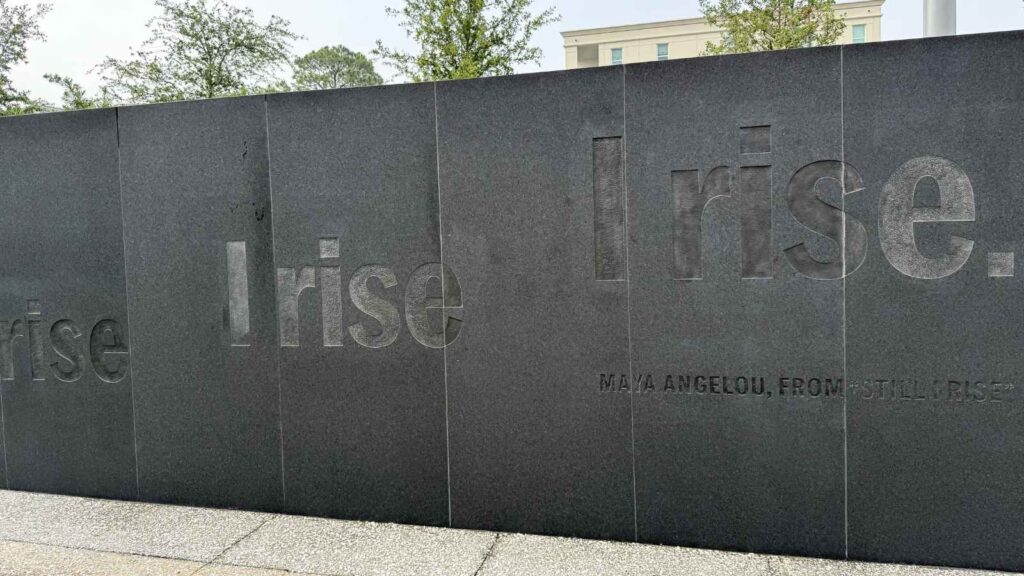
At the edge of Gadsden’s Wharf in Charleston, South Carolina, a shallow pool catches the harbor light. Look down, and the floor comes into focus: hundreds of engraved human figures, packed together in the configuration of a ship’s hold. The Tide Tribute sits beneath the International African American Museum on the site where an estimated 40% of enslaved Africans brought to the United States first set foot on American soil, and it tells you something essential about what lands on the Juneteenth table every June 19.
This post may contain affiliate link(s). As an Amazon Associate, I earn from qualifying purchases. See Disclosures.
Every June 19, the history of Juneteenth is remembered not only at the waterfront but also around the table. More than half of U.S. adults plan to celebrate Juneteenth this year, up from 49% in 2025, and for most of those celebrating, food is central to how the day gets observed. What fewer people know is that the dishes on that table have been carrying history a lot longer than the holiday itself. The red drink, the barbecue, the watermelon, the cake; every one of them has roots that run back across the Atlantic.
The fire that started it all
Barbecue became central to early Juneteenth celebrations, as James Beard Award-winning culinary historian Adrian Miller, author of “Black Smoke: African Americans and the United States of Barbecue,” has documented. When Union soldiers arrived in Galveston, Texas, on June 19, 1865, to deliver the news that slavery had ended more than two years after the Emancipation Proclamation, the gatherings that followed were built around the pit.
Miller has recorded how those first Emancipation Day celebrations centered on whatever meat was local: goat in some parts of Texas, whole hog in others, beef in still others. The specifics varied by region. What didn’t vary was the act itself. Formerly enslaved people cooking what they chose, for themselves, for the first time. The cookout was reclamation before it was tradition.
Everything on the table is red
The color is not an accident. Red foods and drinks, strawberry soda, red velvet cake, watermelon and hibiscus punch, have been served on Juneteenth tables since those first Texas celebrations, and the reasons run deeper than most people realize. One explanation, passed down through generations of Black families, holds that the red honors the bloodshed by enslaved ancestors.
James Beard Award-winning food historian Michael Twitty traces the tradition further back, to Yoruba and Kongo peoples in West and Central Africa, where red carried sacred spiritual energy representing power, sacrifice and transformation. Miller has separately documented how kola nut tea and hibiscus drinks, both made with red-hued ingredients native to West Africa, crossed the Atlantic during the slave trade. The people who made them kept making them. By the late 1800s, those ancestral drinks had evolved into red carbonated sodas, and Big Red, created in Waco, Texas, in 1937, became a Juneteenth fixture across the state.
James Beard Award-nominated food writer Nicole A. Taylor, author of “Watermelon & Red Birds,” the first cookbook dedicated entirely to Juneteenth, puts it plainly: red drinks connect Black people across the globe, from West Africa to Jamaica to Brooklyn to Texas. That thread, historians say, has never broken.
What Charleston holds
The International African American Museum makes that thread visible in a way few places can. Built on the site of Gadsden’s Wharf, where many African Americans can trace ancestry, with estimates ranging from 80% to 90%, the museum retells the full arc from the African continent through the Middle Passage and into American life.
The Gullah Geechee gallery is where the food story sharpens. Because enslaved Africans on the Sea Islands and coastal plantations of South Carolina, Georgia and Florida were relatively isolated, they retained West African food culture more completely than almost anywhere else in the country.
Red rice, long-grain white rice cooked with tomato, garlic and onion and nearly identical to West African jollof, is still a Charleston staple. Okra, brought to America by enslaved Africans, is the backbone of the region’s cooking. Plan for at least two hours in the museum; the exhibits don’t let you move quickly, and that’s the point.
The table as a living archive
The cookbook Taylor published wasn’t a nostalgia project, but a documentation. It contains over 75 recipes that treat the Juneteenth table as a living culinary tradition, not a fixed one. New dishes enter the canon every generation. The red drink stays. What the food has always done, across every decade when Juneteenth had no federal standing, official programming or corporate sponsorship, is hold the memory. The barbecue pit, the red drink, the okra: they were doing the historical work long before the holiday had a name most Americans recognized.
It matters now
Juneteenth has been a federal holiday since 2021, but celebrations date to 1866, when Black Texans gathered with music, food and cookouts exactly one year after emancipation reached Galveston. The growing number of Americans now joining that observance is coming to a table that was already set. The food on it has been telling this story for more than 150 years. The history was always there for anyone willing to look down at what was on the plate.
Jennifer Allen is a retired professional chef and long-time writer. Her work appears in dozens of publications, including MSN, Yahoo, The Washington Post and The Seattle Times. These days, she’s busy in the kitchen developing recipes and traveling the world, and you can find all her best creations at Cook What You Love.