
For more than a century, Hurtigruten, formerly Kystruten Bergen-Kirkenes, has been Norway’s connection to the sea. Founded in 1893 to carry mail, cargo and passengers between remote coastal towns, it became the country’s lifeline, linking fishing villages and transporting everything from supplies to schoolchildren. Along the coast, generations grew up watching the white, red and black ships sail past their windows, marking the passage of time as reliably as the tides.

This post may contain affiliate links that may earn us a commission. For more information, see our Disclosures.
Built for Norway’s coastal routes, today Hurtigruten carries travellers the same way locals have journeyed for more than a century: by sea, between fjords, fishing towns and harbors that still depend on the water. I joined Hurtigruten’s Trollfjord’s final southbound voyage of the season from Svalbard to Bergen. It was a cruise that felt like both a getaway and a glimpse into Norway’s coastal way of life.
The full cruise starts in Bergen, takes a northern route and then a southern trip. You can join the cruise at the beginning for the whole trip, or do as I did and join in Svalbard for the southern itinerary.
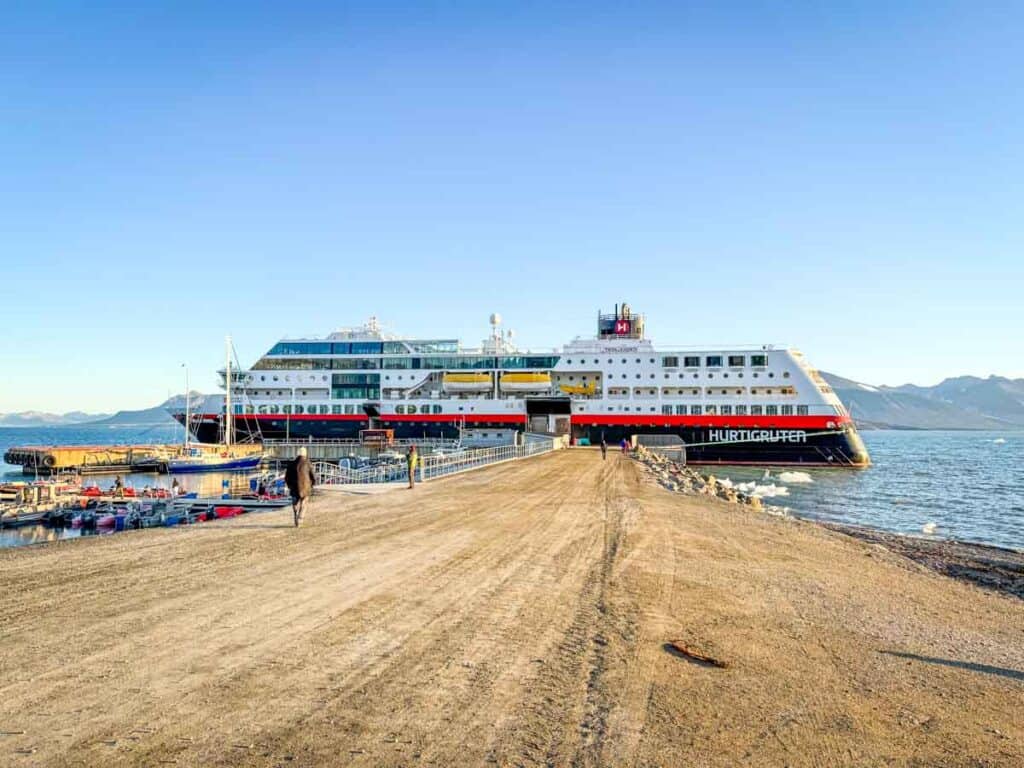
Svalbard is almost literally at the top of the world, at least as far as people can comfortably travel. Longyearbyen is the name of the town, a place so remote that the danger of polar bears is real; anyone going beyond the settlement is expected to go with a guide who carries a rifle.
After arriving in mid-September, I spent two days exploring the world’s northernmost town. While there, it snowed a bit, leaving a white dusting on the tops of the surrounding mountains. Then it was time to sail south, following a route that once carried mail, cargo and stories between Norway’s far-flung communities.
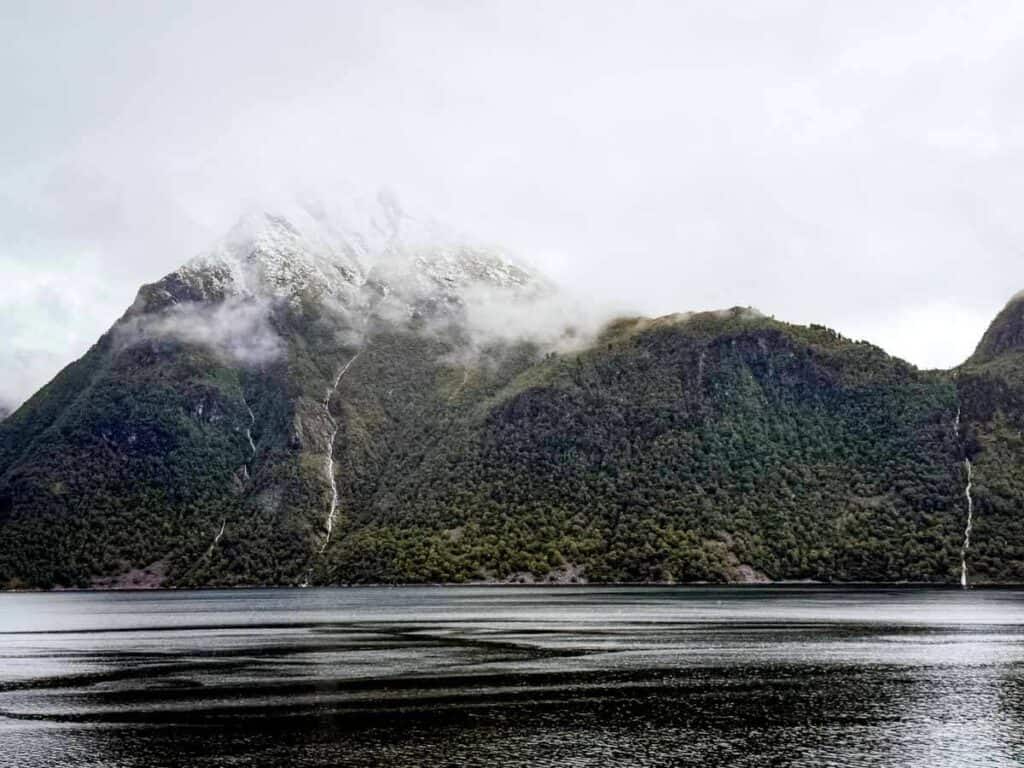
The eight-day journey winds through narrow fjords and seaside villages where the sea remains a lifeline. It’s a modern voyage with deep roots, and a reminder that in Norway, travel often begins and ends on the water.
Hurtigruten’s legacy
I explored the company’s legacy at the Hurtigruten Museum in Stokmarknes, a quiet town in the Vesterålen archipelago. The museum was literally built around the preserved MS Finnmarken, a 1956 vessel now encased inside the museum’s glass-and-steel structure. Walking through its restored lounges and compact cabins felt like stepping back into a different era, when these ships provided both workplace and lifeline for the communities they served.
That history feels alive aboard the MS Trollfjord. The ship may be modern, with polished interiors and panoramic decks, but the purpose remains the same: to move people and goods along one of the most dramatic coastlines in the world. Each stop still ties coastal communities together, a living continuation of the story that began more than 130 years ago.
Life aboard the Trollfjord
MS Trollfjord is the perfect size for exploring Norway’s coast. It’s large enough for comfort but small enough to dock in towns that bigger ships pass by. Upgraded in 2023 for Hurtigruten’s Signature Voyages, it blends modern design with the heritage of a line that still connects communities along the coast.
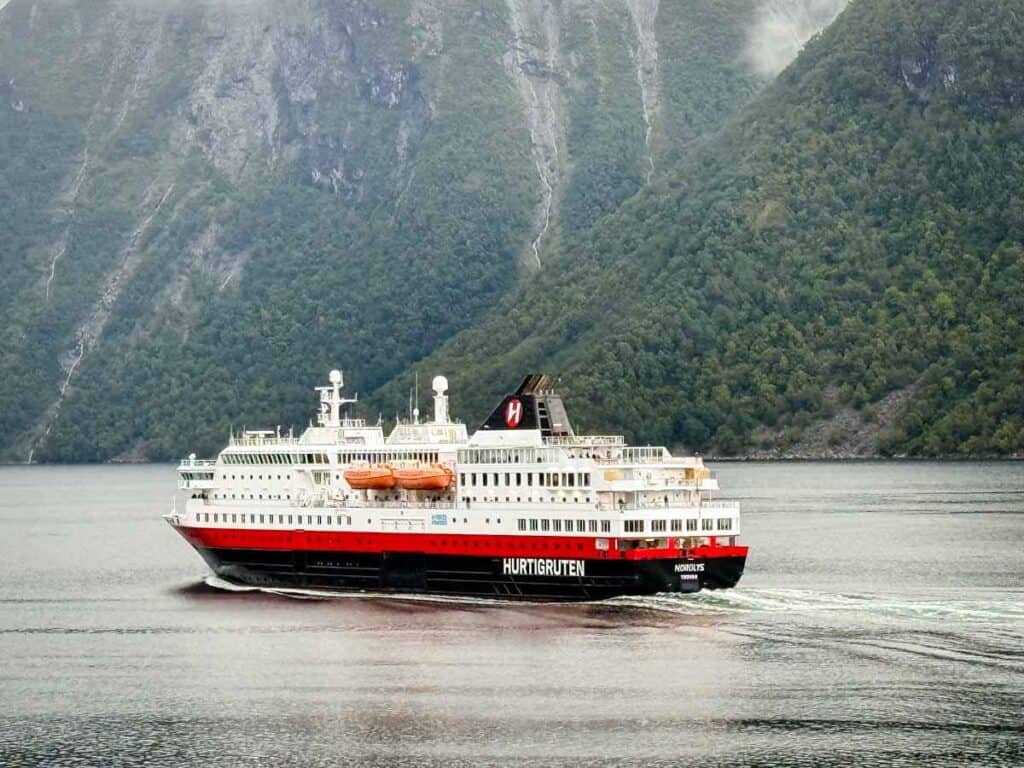
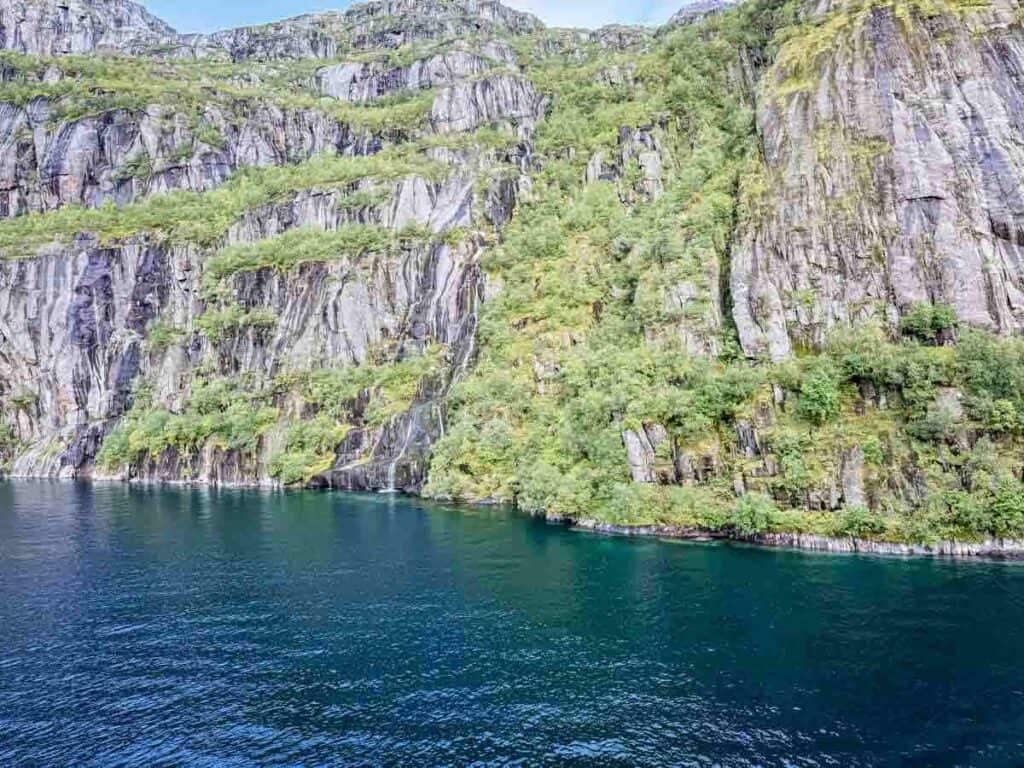
I spent most days on the top deck, watching the fjords unfold. The scenery changed constantly with small fishing boats cutting across the water, red houses on rocky shores and mountains rising straight from the sea. Cruising into Trollfjord, the ship’s namesake, was unforgettable. The mountain walls closed in until it felt like you could reach out and touch them, and the water was still as glass, mirroring every peak and tree. The captain turned the ship around several times so everyone could take in the view before easing back toward open water.
Flavors of the coast
Hurtigruten offers an all-inclusive food and beverage program. Meals aboard Trollfjord follow Hurtigruten’s Norway’s Coastal Kitchen philosophy, which focuses on local ingredients and regional identity. Nearly everything served onboard comes from Norwegian producers along the coast.
Flora, the main restaurant, offers buffet-style breakfast and lunch, followed by a seated dinner that changes with the regions the ship sails through. Breakfasts were a highlight, with platters of smoked salmon, baskets of warm bread and local cheeses from Hurtigruten’s short-travelled cheese program, including Nidelven Blå and Kraftkar. Even simple dishes felt distinctly Norwegian.
Røst, the fine dining restaurant, is open for breakfast, lunch and dinner. Lunch and dinner feature tasting menus where presentation is as important as flavor. Plates arrive like small pieces of plated art, each one precise and beautifully composed. The food reflects Scandinavian cooking at its best with smaller portions, clean flavors and a focus on seafood, pickling and balance.
Árran, the brasserie, leans into hearty coastal cooking with aged meats, fresh king crab cooked to order and local specialties that celebrate Norway’s rugged food traditions.
Hurtigruten’s culinary ambassadors program deepens that connection. Chefs like Máret Rávdná Buljo, the line’s first Sámi culinary ambassador, introduce ingredients and stories from northern Norway’s indigenous communities. Her dishes feature reindeer, arctic berries and foraged plants, and blend tradition with modern technique.
Bubbles and beyond
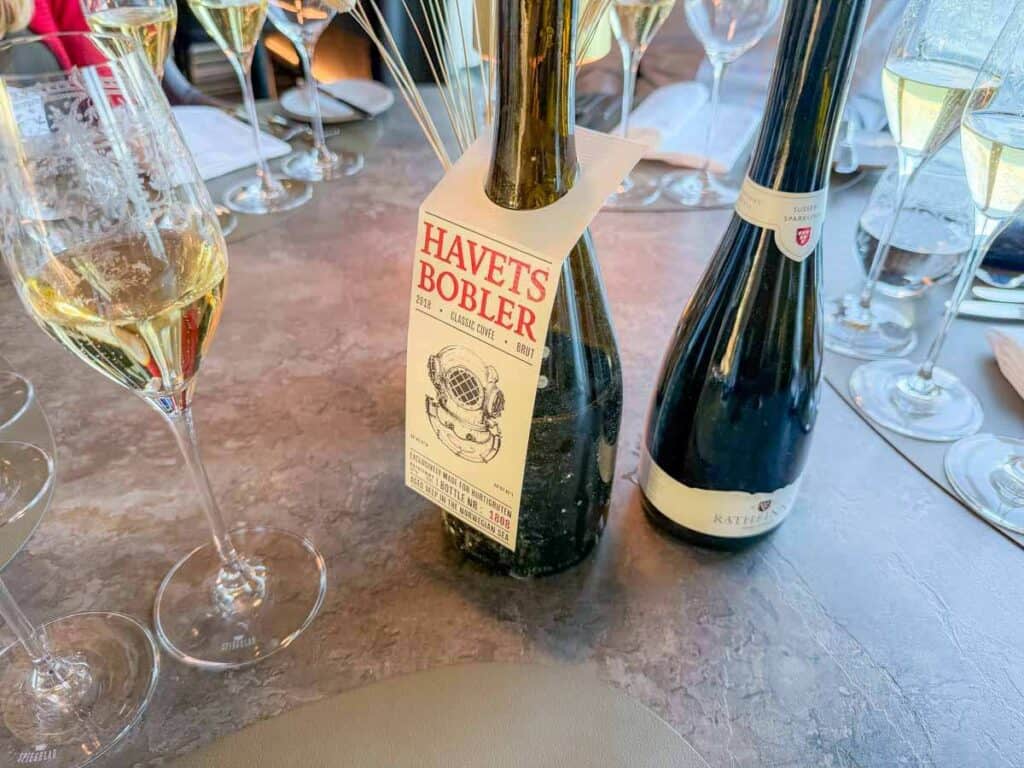
The same attention to detail carries through to the drinks. Hurtigruten’s Bubbles of the Sea, or “Havets Bobler” in Norwegian, is one of the most distinctive features of its beverage program. It begins as a classic cuvée but matures deep beneath the Norwegian Sea, submerged for months, 112 feet below the surface. The bottles return encrusted with sand and sea life, the sparkling wine richer and more flavorful from its time under the sea.
Beyond its signature bubbles, Trollfjord offers a thoughtful selection of Norwegian beer and wine, many from small producers along the coast. The bar serves craft ales from Arctic breweries, local aquavit and cocktails made with regional ingredients like cloudberry and sea buckthorn. Guests can order wine pairings with each meal or enjoy a glass in Bar 1893, a relaxed space overlooking the water.
Exploring at the edges
Some of the most memorable moments came after docking and exploring what lay beyond the pier. Each stop offered something different, from quiet fishing villages to wild stretches of mountains and sea. Some excursions were short, just a few hours between sailings, while others filled the day with open-air adventure.
In Svalbard, I joined a small group for dog sledding, though in September, the dogs pull wheeled carts instead of sleds. The dog’s energy was contagious, and the Arctic landscape was wide and empty around us. Elsewhere, we boarded RIB boats that skimmed across glassy water toward glaciers and steep fjord walls, the wind cold and the scenery unforgettable.
Along the mainland, the options ranged from gentle bus tours through mountain passes to more offbeat finds, like the golden toilet, a gleaming restroom built for the Norwegian king. Fishing trips, ATV rides and hikes to panoramic viewpoints rounded out the mix, each revealing a different side of Norway’s coast.
Every activity seemed designed to bring visitors closer to the landscape rather than shield them from it. Whether on land or at sea, the focus stayed the same: to experience Norway the way locals do, surrounded by raw beauty and never far from the water.
A different kind of cruise
By the time Trollfjord reached Bergen, the coastline felt familiar in a way I hadn’t expected. Each stop, meal and quiet moment on deck revealed another layer of Norwegian life shaped by the sea. The voyage was about movement and connection, about seeing how this vast, rugged country still depends on the same routes that carried mail, cargo and families for generations.
Sailing with Hurtigruten isn’t just a way to see Norway’s fjords; it’s a way to understand them. The ship becomes part of the landscape, gliding through green valleys and narrow inlets that few others reach. It’s travel that feels grounded and genuine, guided by history, food and the unshakable pull of the coast.
Jennifer Allen is a retired chef turned traveler, cookbook author and nationally syndicated journalist; she’s also a co-founder of Food Drink Life, where she shares expert travel tips, cruise insights and luxury destination guides. A recognized cruise expert with a deep passion for high-end experiences and off-the-beaten-path destinations, Jennifer explores the world with curiosity, depth and a storyteller’s perspective. Her articles are regularly featured on the Associated Press Wire, The Washington Post, Seattle Times, MSN and more.