
#CrunchTok has racked up more than 1.5 billion views on TikTok. Social media usage of the word “velvety” to describe food is up 40% quarter over quarter, and nearly half of American restaurant-goers now say texture is just as important as taste. Flavor used to be the star, but in 2026, how food feels has caught up.
This post may contain affiliate link(s). As an Amazon Associate, I earn from qualifying purchases. See Disclosures.
Some bites stick in the memory long after the plate is cleared, and it is rarely just about seasoning. More often, it is about texture: the crisp of a slightly burnt edge, the pull of melted cheese, the crunch of toasted nuts on top of a salad. These seemingly small details are what make a dish hard to forget. Restaurants have built dishes around this for years, and now home cooks are catching up.
Texture is the new flavor
Americans pay more attention than ever to the way food breaks, crunches, melts and pulls, and the word “creamy” now appears on 45% of American menus. Younger generations drive the shift hardest, with 75% of Gen Z and 80% of millennials saying texture is a primary influence on their snack cravings. Food manufacturers have also noticed, with the global food texture market estimated at $17.43 billion in 2026 and projected to hit $29.10 billion within the next decade.
From fine dining kitchens to mainstream cooking
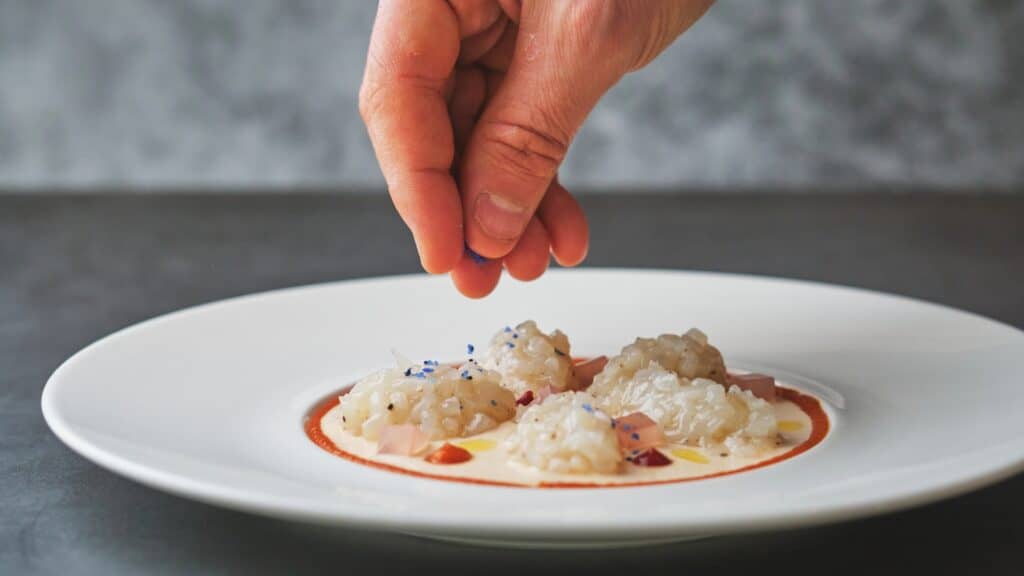
Chefs have always known about the power of texture. Thomas Keller, one of the most celebrated American chefs alive, believes texture is as important as taste in creating memorable dining experiences. Fine dining kitchens have built dishes around contrast for decades, pairing crunchy with creamy and silky with crispy to keep diners engaged from the first bite to the last.
What changed is that the trend moved out of restaurants and into everyday homes. ASMR content, with its satisfying crunches, sizzles and pops, trained a whole generation to associate sound and texture with pleasure. In addition, Dubai chocolate went viral in 2024, with a crunchy kataifi filling inside a smooth chocolate shell. The conversation about texture exploded, and suddenly, contrast was everywhere, making the #CrunchTok boom less of a surprise and more of a confirmation.
Beyond the crunch
Crunchy was the gateway, but the trend has grown into something bigger, with soft and chewy textures rising alongside crispy ones. What matters most is contrast: soft meets crunchy, silky meets crispy and every bite changes as you chew.
“Crunch, chew, and contrast are driving flavor perception as much as taste. Texture is no longer garnish, it’s a flavor driver,” says John Koch, founder of trend consultancy Koch Associates, who identified “Texture as Flavor” as one of the defining food trends of 2026.
3 easy ways to add more texture to your cooking
Adding texture to everyday meals is mostly about paying attention to contrast. Here are three simple places to start.
Crispy toppings and finishes
A handful of something crunchy on top of a soft or creamy dish is one of the oldest tricks in cooking, and it still works. Toasted breadcrumbs, fried shallots, crushed nuts, panko, crispy chickpeas, chili crisp, even just a scatter of flaky sea salt; all add a burst of texture that wakes up a dish.
A brie mac and cheese with a golden breadcrumb topping is the perfect example. The creamy, cheesy base is comforting on its own, but the crunchy crust on top turns every bite into something much more interesting.
Contrast creamy and crunchy
This is where the texture trend really comes to life, and the goal is to build a dish where every forkful delivers both softness and crunch. Serving a crispy-skinned chicken thigh with a velvety pan sauce, finishing a silky risotto with toasted pine nuts and folding crunchy fried chickpeas into a creamy dip are just a few ways to do this.
A bowl of creamy gorgonzola gnocchi with walnuts is another great example. The pillowy gnocchi and rich gorgonzola sauce would be delicious on their own, but the walnuts folded into the sauce bring a crunch to every bite. That contrast keeps the dish from feeling heavy and makes it far more interesting to eat.
Layered bites
The most satisfying bites are the ones that keep changing as you chew, such as flaky pastries filled with soft ganache, chewy cookies with a crackly top or tacos with a crunchy shell, tender meat and a creamy sauce. Home cooks can build layered texture into almost any meal by combining something tender, something creamy and something crunchy.
A walking taco casserole is a textbook example, with its tender ground beef and creamy taco filling underneath a generous topping of crunchy tortilla chips. Every forkful delivers a different combination of tender, creamy and crunchy.
The new star of the plate
For years, the advice on home cooking has centered on taste: season boldly, build layers of flavor and balance sweet and salty. That advice still holds, but it is no longer the whole picture.
The American home cook has finally figured out what chefs have been saying for decades: texture shapes the way food tastes. The crunch, the pull, the melt; they all change how a bite lands on the palate. Texture is no longer just a garnish; it is the new star of the plate.
Emmeline Kemperyd is a recipe developer and food blogger with over 20 years of experience. She is the founder of always use butter, a site dedicated to quick and easy recipes for busy people.